
Building a Conversion-Driven Nurturing Series
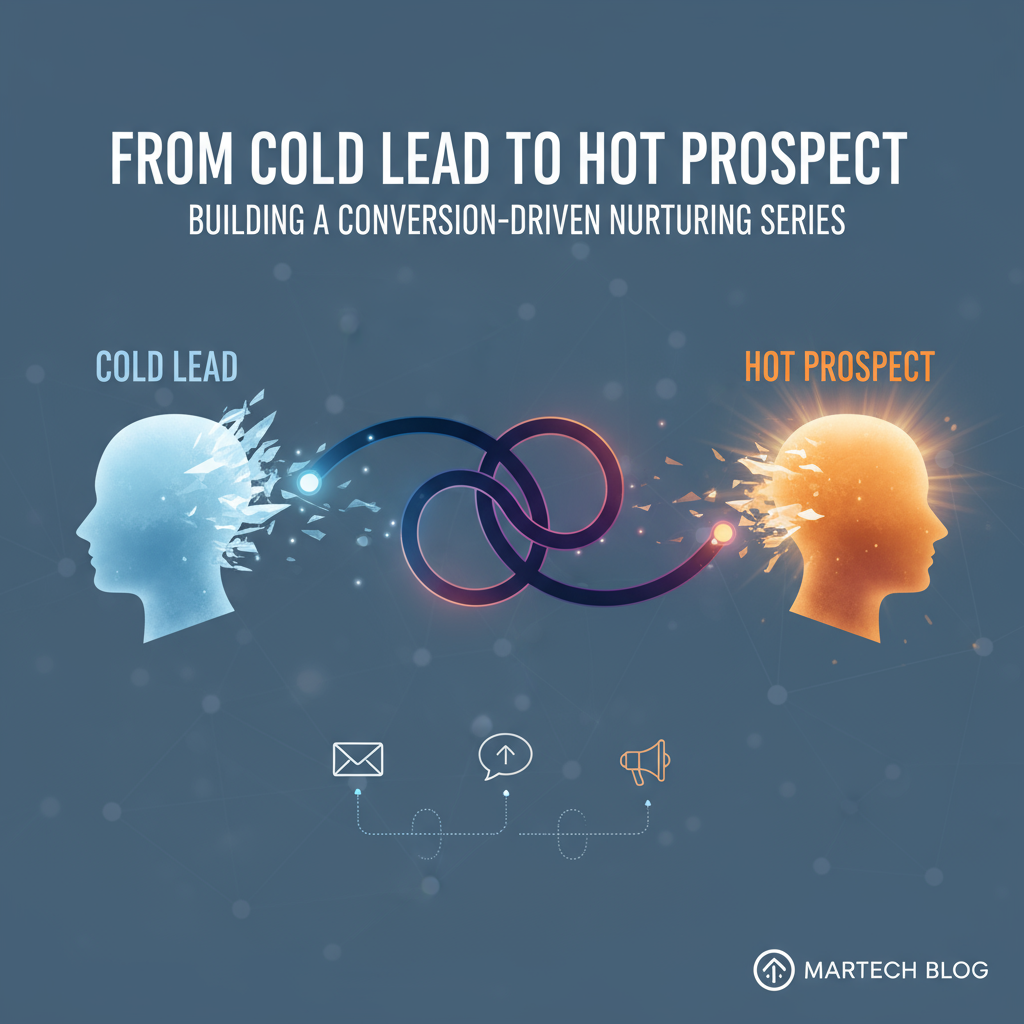
You've done the hard work. Your marketing funnels are pulling in new leads, your contact list is growing, and on paper, everything looks great. But there's a disconnect. These new leads aren't turning into customers, and your sales team is spending valuable time chasing contacts who simply aren't ready to buy. This is the nurturing gap—the chasm between initial interest and genuine purchase intent. In 2025, simply generating leads isn't enough. The key to sustainable growth lies in transforming those lukewarm inquiries into sales-ready opportunities. This is the power of a meticulously crafted, conversion-driven nurturing series.
Key Takeaways
- Nurturing is a relationship, not a sales pitch. The goal is to build trust and provide value long before you ask for the sale.
- Segmentation is non-negotiable. Personalized communication based on a lead's behavior, demographics, and interests dramatically increases engagement and conversion rates.
- Automation is your scaling engine. Use modern marketing automation and AI tools to deliver the right message at the right time, without manual intervention.
- Value is the currency of conversion. Every email and touchpoint must educate, solve a problem, or build credibility to move a prospect forward.
Table of Contents
- Understanding the Nurturing Gap: Why Most Leads Go Cold
- Laying the Groundwork: Segmentation and Personalization
- Crafting the Perfect Nurturing Sequence: A Step-by-Step Guide
- Leveraging Technology: Automation and AI in 2025
- Measuring Success: Key Metrics for Your Nurturing Series
- Common Pitfalls to Avoid in Lead Nurturing
Understanding the Nurturing Gap: Why Most Leads Go Cold
A "lead" is simply a contact, not a guaranteed customer. Research consistently shows that 50% of qualified leads are not ready to make an immediate purchase. Without a structured follow-up process, these potential customers fall through the cracks, forgotten. This is where the journey from cold lead to hot prospect begins. Lead nurturing is the strategic process of building relationships with potential clients at every stage of their journey. It’s about providing relevant information, addressing their pain points, and establishing your brand as a trusted authority. Companies that excel at lead nurturing generate 50% more sales-ready leads at a 33% lower cost. Neglecting this crucial step is a primary reason why so many marketing campaigns fail to deliver a positive ROI. It's not just about what you say; it's about building a conversation that guides them toward a solution—yours.
Laying the Groundwork: Segmentation and Personalization
Before you write a single email, you must understand who you're talking to. A one-size-fits-all approach is a recipe for unsubscribes. Effective nurturing starts with segmentation—the practice of dividing your email list into smaller, more targeted groups. This allows for hyper-personalized messaging that resonates deeply with each recipient. Your initial lead generation efforts should capture data points that make this possible.
Consider segmenting your leads based on:
- Lead Source: How did they find you? A lead from a webinar has different context than one from a trade show.
- Behavioral Data: What pages have they visited on your website? Did they download a specific whitepaper or just your general newsletter?
- Demographics: Factors like job title, industry, company size, and geographic location can inform the relevance of your content.
- Engagement Level: Are they actively opening your emails and clicking links, or have they been dormant for months?
By segmenting your audience, you can tailor your content to address their specific needs and interests, making your communication feel less like a marketing blast and more like a helpful, one-on-one conversation.
Crafting the Perfect Nurturing Sequence: A Step-by-Step Guide
A successful nurturing series is a carefully choreographed journey. It’s not a random collection of emails but a logical progression of value. While the exact number of steps can vary, a proven framework often includes these four critical phases.
Step 1: The Welcome & Education Phase (Emails 1-2)
The first interaction is crucial. The goal here is not to sell, but to welcome, confirm their action (e.g., "Thanks for downloading our guide!"), and set expectations. Use this opportunity to deliver the promised value immediately and introduce your brand's mission. Your second email should follow up by offering another piece of high-value, related content, like a blog post, a short video tutorial, or an industry report. This phase establishes you as a helpful resource, not just a vendor.
Step 2: The Problem & Solution Phase (Emails 3-4)
Now that you’ve built initial trust, it’s time to agitate the problem that led them to you in the first place. Use these emails to dive deeper into their pain points. Share insights that demonstrate you truly understand their challenges. Then, begin to pivot towards the solution. This is not a hard pitch for your product yet. Instead, introduce the concept of a solution. For example, discuss the benefits of a certain methodology or technology that your product happens to facilitate. Frame it as educational content that helps them solve their problem.
Step 3: The Social Proof & Trust-Building Phase (Emails 5-6)
People trust other people more than they trust brands. This phase is all about building credibility through social proof. Share a compelling case study that showcases how a similar company solved the exact problem your lead is facing. Use testimonials, customer quotes, or links to positive reviews. You can also use this phase to address common objections or FAQs, proactively removing barriers to purchase. This builds confidence and demonstrates that you deliver real-world results.
Step 4: The Call-to-Action & Conversion Phase (Email 7+)
After consistently providing value and building trust, you have finally earned the right to ask. This is where you make a clear, direct, and low-friction offer. It could be an invitation for a demo, a free trial, a consultation, or a special introductory offer. The key is to make it a logical next step in their journey. The call-to-action should be specific and highlight the benefit to them. For leads who don't convert, they can be moved to a long-term nurturing sequence for continued, less frequent communication.
Leveraging Technology: Automation and AI in 2025
Manually executing a personalized nurturing series for hundreds or thousands of leads is impossible. This is where marketing automation platforms (like HubSpot, Marketo, or ActiveCampaign) become essential. These tools allow you to build automated workflows that trigger emails based on user actions, time delays, and segment criteria. In 2025, the game-changer is the integration of Artificial Intelligence. Modern marketing platforms now use AI to power predictive lead scoring, which automatically identifies the "hottest" prospects based on their engagement patterns. Furthermore, AI can enable dynamic content personalization, where different sections of an email automatically change to match the recipient's known interests. This level of AI automation ensures maximum relevance at scale, significantly boosting the efficiency and effectiveness of your nurturing efforts.
Measuring Success: Key Metrics for Your Nurturing Series
Building a nurturing series is not a "set it and forget it" task. Continuous monitoring and optimization are critical for long-term success. Focus on these key performance indicators (KPIs) to understand what's working and what isn't:
- Open Rates & Click-Through Rates (CTR): These are top-level indicators of your subject line and content relevance.
- Conversion Rate: What percentage of leads who enter the sequence complete the desired action (e.g., request a demo)?
- Sales Cycle Length: Is your nurturing series successfully shortening the time it takes to turn a lead into a customer?
- Unsubscribe Rate: A high rate might indicate your content is irrelevant, too frequent, or not what the user expected.
Use A/B testing on subject lines, email copy, calls-to-action, and sending times to systematically improve these metrics over time. Data-driven optimization is the final piece of the puzzle in building a truly conversion-driven nurturing series.
Common Pitfalls to Avoid in Lead Nurturing
Even with the best intentions, nurturing campaigns can go wrong. Be mindful of these common mistakes that can derail your efforts. First, avoid selling too early. The initial emails must focus on building trust and providing value, not pushing a product. Second, don't ignore lead behavior. A static, unchanging sequence for every lead is inefficient. Use automation to adjust the path based on how a lead interacts with your content. Third, maintain consistency. An erratic communication schedule can cause leads to forget who you are. Finally, ensure the entire user experience is seamless. Driving a warm lead to a confusing landing page is one of the most critical website mistakes you can make. Every touchpoint should be professional and aligned with your brand.
Ready to Turn Up the Heat on Your Leads?
Building a high-converting nurturing series takes strategy, technology, and compelling content. If you're ready to stop letting valuable leads go cold and start turning them into loyal customers, our team can help. We specialize in creating data-driven nurturing strategies that deliver measurable results.
Conclusion: From Frosty to On Fire
The journey from cold lead to hot prospect is a marathon, not a sprint. It's a systematic process of building trust, demonstrating value, and guiding potential customers toward a confident purchase decision. By understanding the nurturing gap, embracing segmentation, crafting a strategic content sequence, and leveraging modern technology, you can build an automated engine for growth. This engine doesn't just generate leads; it cultivates relationships, shortens sales cycles, and ultimately drives revenue by ensuring no potential customer is ever left out in the cold.
Sources & References
The Ultimate List of Lead Nurturing Stats - HubSpot
What is Lead Nurturing? A Beginner's Guide - Salesforce
Five Steps to Creating a Successful Lead-Nurturing Campaign - MarketingProfs