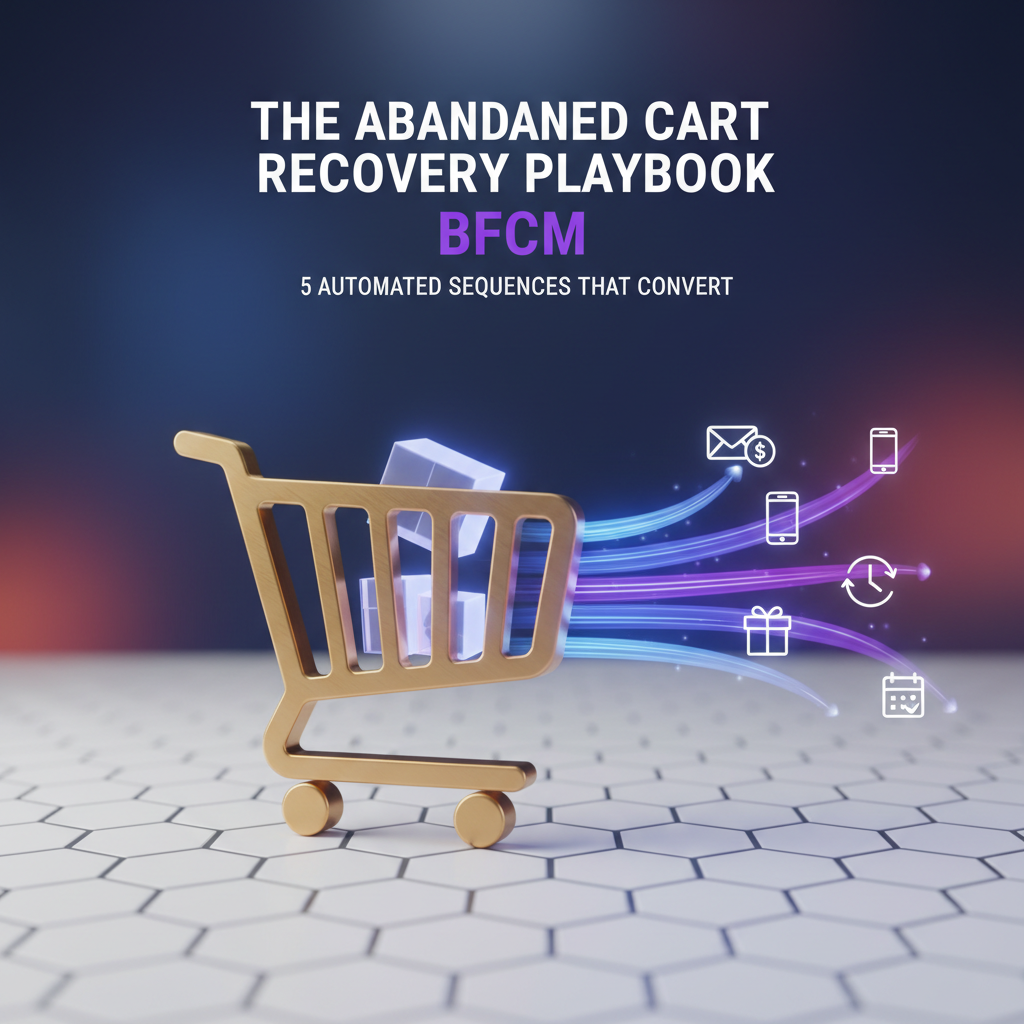
The Abandoned Cart Recovery Playbook for BFCM: 5 Automated Sequences That Convert
In 2025, Black Friday and Cyber Monday (BFCM) remain pivotal events for e-commerce businesses worldwide. However, the challenge of abandoned carts continues to plague retailers, with a staggering 75% of online carts left behind. To combat this, businesses are leveraging automation and AI to recover lost sales. Here, we unveil "The Abandoned Cart Recovery Playbook for BFCM: 5 Automated Sequences That Convert"—a strategic guide to boosting conversions during this critical sales period.
Key Takeaways
- Abandoned cart recovery is crucial for maximizing BFCM sales.
- Automation and AI play pivotal roles in crafting effective recovery sequences.
- Personalization and timely engagement are key to conversion success.
- Understanding customer behavior enhances recovery strategies.
- Integrated tools like GoHighLevel improve lead management efficiency.
Table of Contents
- Understanding Abandoned Carts
- Sequence 1: Timely Reminders
- Sequence 2: Personalized Offers
- Sequence 3: Social Proof
- Sequence 4: Multi-Channel Engagement
- Sequence 5: AI-Driven Insights
- Frequently Asked Questions (FAQ)
- Conclusion
- Call to Action
- Sources & References
Understanding Abandoned Carts
Abandoned carts represent a significant loss of potential revenue for e-commerce businesses. In 2025, the reasons for cart abandonment include unexpected costs, complicated checkout processes, and lack of trust. Addressing these issues starts with understanding customer behavior. Tools like GoHighLevel Lead Management provide insights into customer journeys, helping businesses identify friction points and tailor solutions accordingly.
Sequence 1: Timely Reminders
The first step in recovering abandoned carts is sending timely reminders. These reminders should be automated to reach customers within hours of abandonment, when purchase intent is still fresh. This sequence includes a series of emails and push notifications that highlight the abandoned items and encourage customers to complete their purchase.
Sequence 2: Personalized Offers
Personalization can significantly increase conversion rates. By leveraging data analytics, businesses can offer personalized discounts or product recommendations. This sequence can be paired with AI-driven lead generation techniques to further customize the shopping experience, making it more appealing for each customer.
Sequence 3: Social Proof
Integrating social proof into your recovery sequences can enhance credibility and entice customers back to the checkout. Testimonials, reviews, and user-generated content can be included in follow-up emails to reassure potential buyers of product quality and satisfaction.
Sequence 4: Multi-Channel Engagement
Engaging customers across multiple channels increases the likelihood of cart recovery. This sequence involves using email, SMS, and social media retargeting to maintain visibility. Multi-channel strategies have shown to boost recovery rates by as much as 30%, as they meet customers wherever they are most active.
Sequence 5: AI-Driven Insights
AI is transforming how businesses approach abandoned cart recovery. By analyzing extensive customer data, AI provides predictive insights that can be used to optimize recovery sequences. For example, AI can predict the best time to send a reminder or identify which products are most likely to be purchased. This approach aligns with the broader trend of AI automation in e-commerce.
Frequently Asked Questions (FAQ)
What is the average cart abandonment rate in 2025?
As of 2025, the average cart abandonment rate is approximately 75%, though this can vary by industry.
How effective are automated recovery sequences?
Automated sequences can recover between 10-30% of abandoned carts, depending on the strategy and execution.
What role does personalization play in recovery?
Personalization increases customer engagement and conversion rates, making it a crucial component of recovery strategies.
How can AI enhance cart recovery?
AI enhances recovery by providing data-driven insights that allow for more targeted and effective customer engagement.
Why is multi-channel engagement important?
Multi-channel engagement ensures that you reach customers across various platforms, increasing the likelihood of cart recovery.
What are the best tools for managing cart recovery?
Tools like GoHighLevel and other CRM platforms are excellent for managing and optimizing cart recovery processes.
Conclusion
"The Abandoned Cart Recovery Playbook for BFCM: 5 Automated Sequences That Convert" provides a comprehensive approach to tackling one of the biggest challenges in e-commerce. By leveraging AI, personalization, and multi-channel strategies, businesses can significantly increase their recovery rates and revenue. Understanding customer behavior and strategically engaging them with automated sequences are key to success in 2025.
Call to Action
Ready to transform your abandoned cart strategy? Implement these sequences and watch your BFCM sales soar. For more insights on how AI is reshaping lead management, check out our article on The Future of Lead Generation: AI and Automation.
Sources & References
Cart Abandonment Rate Worldwide - Statista