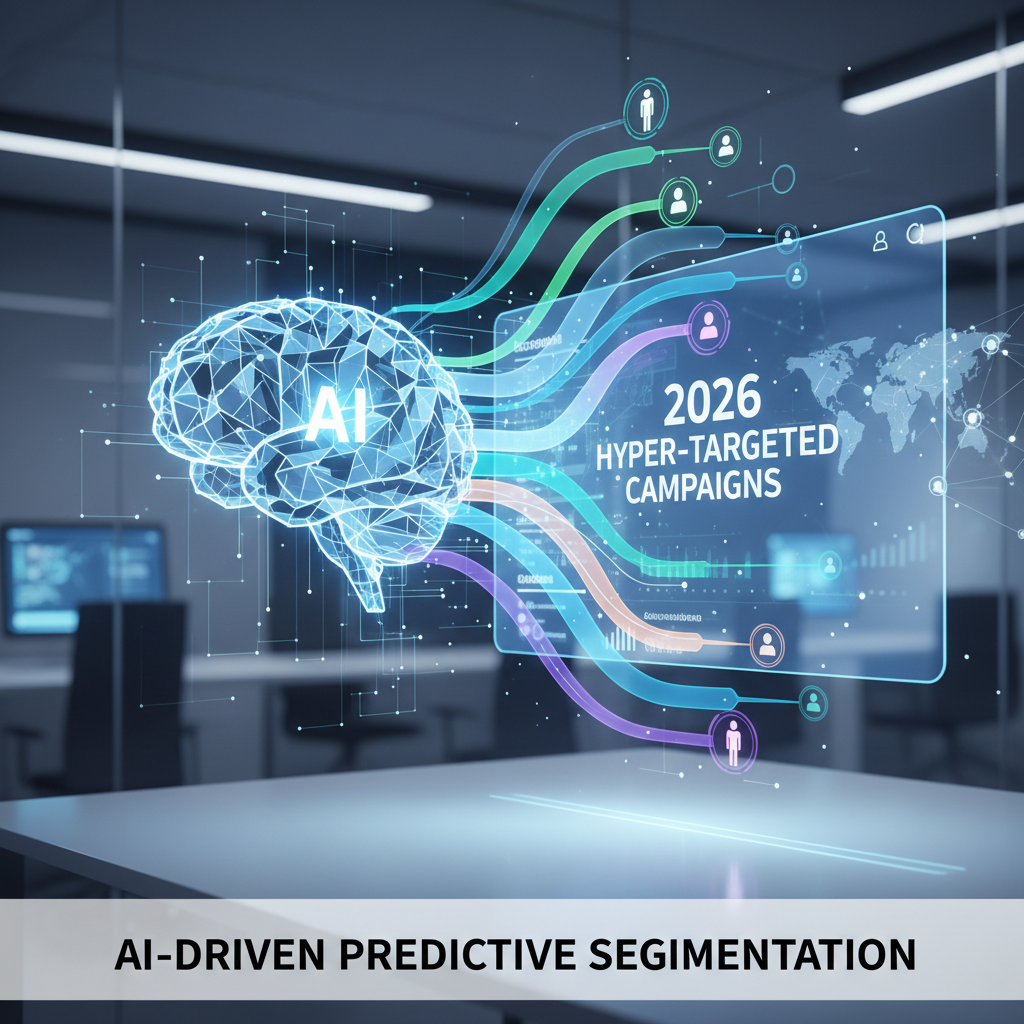
AI-Driven Predictive Segmentation: Architecting Your 2026 CRM for Hyper-Targeted Campaigns
As we navigate the complexities of 2025, the age-old marketing playbook of demographic and psychographic segmentation is showing its cracks. Today's customers, fluent in digital and expecting seamless, intuitive experiences, move through non-linear journeys that static labels can no longer capture. The brands poised to dominate in 2026 and beyond are not just listening to their customers; they are anticipating their next move. This is the power of AI-driven predictive segmentation—a transformative approach that shifts your strategy from reactive to prescient, turning your CRM from a simple database into a dynamic engine for growth.
Key Takeaways
- Beyond Demographics: Predictive segmentation uses AI to analyze behavioral data and forecast future actions like purchases, churn, or engagement, offering a far more nuanced view than traditional methods.
- The 2026 Imperative: Relying on static segmentation in 2025 is a competitive disadvantage. Architecting a CRM with predictive capabilities is essential for the hyper-personalized landscape of 2026.
- Actionable Intelligence: Key applications include identifying customers with a high propensity to buy, predicting and mitigating churn, and personalizing marketing offers based on predicted lifetime value (LTV).
- Foundation First: Success hinges on a foundation of high-quality, unified data and a commitment to ethical AI practices, including data privacy and algorithmic transparency.
Table of Contents
- What is AI-Driven Predictive Segmentation?
- Why Traditional Segmentation is Failing in 2025
- Core Components of a 2026 Predictive CRM Architecture
- Actionable Predictive Models to Implement Now
- The Ethical Imperative: Data Privacy and Transparency
- Measuring Success: KPIs for Predictive Segmentation
What is AI-Driven Predictive Segmentation?
At its core, AI-driven predictive segmentation is the practice of using machine learning (ML) algorithms to analyze vast datasets of customer behavior—clicks, purchases, support interactions, app usage—to identify patterns and forecast future outcomes. Unlike traditional segmentation, which groups customers based on static attributes like age, location, or past purchases, predictive segmentation creates dynamic cohorts based on propensity.
Instead of a segment called "Females, 30-40, in California," you create segments like:
- High Propensity to Churn: Customers showing a 75% or greater likelihood of canceling their subscription in the next 30 days based on declining usage patterns.
- Likely to Buy - 'Outdoor Gear': Users who have not purchased yet but whose browsing behavior mirrors that of past high-value customers in the outdoor category.
- Predicted High LTV: New subscribers whose initial engagement signals a high probability of becoming a top-tier customer over the next 12 months.
This forward-looking approach allows you to intervene proactively, tailor messaging with surgical precision, and allocate resources where they will generate the highest return.
Why Traditional Segmentation is Failing in 2025
The marketing landscape of 2025 is fundamentally different. Customer expectations for personalization are at an all-time high, with recent studies from McKinsey showing that 71% of consumers expect companies to deliver personalized interactions. Traditional segmentation simply can't keep pace for several reasons:
- It's Rear-View Mirror Marketing: It's based on what customers have done, not what they are likely to do. This is a critical distinction in a fast-moving market.
- It Ignores Nuance: Two customers in the same demographic segment can have wildly different intents and needs. Lumping them together results in generic messaging and wasted ad spend.
- It's Not Scalable: The sheer volume of data points (website interactions, social media engagement, support chats, IoT data) generated by a single customer makes manual analysis and segmentation an impossible task.
- It's Slow: By the time a marketing team manually builds and analyzes a segment, the customer behavior may have already changed. AI models can update segments in near real-time.
Core Components of a 2026 Predictive CRM Architecture
Transitioning to predictive segmentation requires more than just new software; it demands a strategic evolution of your customer data infrastructure. Architecting your 2026 CRM means ensuring it can support these core components.
Unified Data Platform (CDP)
Predictive models are only as good as the data they're fed. Siloed data is the enemy of accurate predictions. A Customer Data Platform (CDP) or a similar unified data warehouse is non-negotiable. It must ingest and consolidate data from all touchpoints—e-commerce platform, mobile app, email service provider, customer support desk, and even in-store POS systems—to create a single, comprehensive customer profile.
Integrated AI/ML Engine
This is the "brain" of the operation. You have options here: leverage the increasingly powerful native AI tools within major CRMs (like Salesforce Einstein or HubSpot's AI features), integrate a specialized third-party AI marketing platform, or develop a custom in-house solution if you have the resources. The key is seamless integration that allows the AI to access the unified data and push its segment outputs back into the CRM for activation.
Real-Time Data Ingestion and Automation
For predictive models to be truly effective, they must act on fresh data. Your architecture needs the ability to process signals as they happen. For example, if a customer's behavior suddenly matches the "high churn risk" profile, an automated workflow should trigger a retention offer or a notification to a customer success manager within minutes, not days.
Now is the time to perform a thorough review of your systems. A complete marketing tech stack 2026 check-up will reveal gaps in your data flow and automation capabilities that you can address before they become critical liabilities.
Actionable Predictive Models to Implement Now
The theory is powerful, but the value lies in application. As you plan for 2026, here are four high-impact predictive models to prioritize:
1. Churn Prediction Models
Acquiring a new customer is far more expensive than retaining an existing one. A churn prediction model analyzes factors like declining login frequency, reduced feature usage, or a drop in support ticket submissions to assign a "churn risk score" to each customer. With this insight, you can proactively target at-risk accounts with special offers, educational content, or personal outreach. This is a cornerstone of Automating Customer Retention 2025 strategies that build long-term loyalty.
2. Propensity to Purchase Models
This model identifies which customers or prospects are most likely to make a purchase in the near future. By analyzing browsing history, cart additions, and time spent on product pages, the AI can score leads and existing customers on their purchase intent. This allows your sales team to prioritize their outreach and your marketing team to target ad spend on the audience segment with the highest probability of conversion.
3. Lifetime Value (LTV) Prediction
Imagine knowing, within days of a new sign-up, which customers are likely to become your most valuable. LTV prediction models analyze early engagement signals to forecast a customer's long-term worth. This allows you to segment your onboarding process, giving potential VIPs a white-glove experience while guiding lower-LTV users through a more automated flow. This is a key element of a sophisticated AI-driven customer onboarding program.
4. Next Best Offer (NBO) Models
Moving beyond simple product recommendations, NBO models consider a customer's entire history and real-time context to suggest the single most relevant product, service, or piece of content to present next. For an e-commerce site, this could mean personalizing the homepage for every visitor. For a financial services firm, it could mean suggesting the right investment product at the right time in their financial journey.
The Ethical Imperative: Data Privacy and Transparency
With great power comes great responsibility. The use of AI in marketing must be grounded in ethical practices. As regulations like GDPR and the CPRA continue to evolve in 2025, transparency is paramount. Customers have a right to know how their data is being collected and used to make predictions. Ensure your privacy policies are clear and your consent management is robust. Furthermore, it's crucial to regularly audit your AI models for inherent biases that could lead to unfair or discriminatory marketing outcomes.
Measuring Success: KPIs for Predictive Segmentation
The impact of predictive segmentation should be measured with business-centric KPIs. While engagement metrics are still useful, the true test lies in:
- Conversion Rate Lift: A/B test campaigns sent to predictive segments against those sent to traditional or control groups.
- Reduction in Churn Rate: Track the percentage of customers saved after being identified by the churn model and targeted with a retention campaign.
- Increase in Customer Lifetime Value (CLV): Measure the average LTV of customers acquired or nurtured using predictive insights.
- Return on Marketing Investment (ROMI): Analyze whether the increased efficiency and effectiveness of hyper-targeted campaigns are improving your overall marketing ROI.
Frequently Asked Questions (FAQ)
What's the difference between AI segmentation and regular marketing automation?
Regular marketing automation typically acts on simple, predefined triggers (e.g., "if a user abandons a cart, send this email"). AI-driven segmentation is the intelligence layer before the automation; it predicts which users are most likely to abandon their cart in the first place, allowing you to intervene even earlier with a more personalized action.
Do I need a data scientist to implement this?
Not necessarily. In 2025, many leading CRM and CDP platforms have built-in, user-friendly AI/ML capabilities that handle the complex modeling behind the scenes. While a data scientist can build more customized models, businesses can start with these "out-of-the-box" solutions.
How much data is needed for predictive models to be accurate?
It depends on the model, but generally, more high-quality data is better. You'll need a sufficient volume of historical data with clear outcomes (e.g., records of who has purchased or churned) for the AI to learn from. Most platforms recommend at least several thousand data points or customer records to start building reliable models.
What are the biggest challenges in implementing AI-driven segmentation?
The primary challenges are typically data-related: data silos, poor data quality, and a lack of a unified customer view. The other major hurdle is organizational—getting buy-in from leadership and training the marketing team to think and act based on predictive insights rather than traditional assumptions.
How does this impact my 2026 marketing budget?
While there is an initial investment in technology and potentially talent, the goal is a higher ROI. By focusing spend on high-propensity segments and reducing churn, predictive segmentation makes your budget work harder. For more on planning your financial strategy, see our guide on budgeting for digital marketing in 2026.
Is predictive segmentation only for large enterprises?
No. While enterprises were early adopters, the democratization of AI tools means that mid-market and even small businesses with sufficient data can now leverage predictive segmentation through their CRM or other marketing platforms, making it a viable strategy across the board.
Ready to Build Your 2026 CRM Strategy?
The shift to predictive intelligence is happening now. Waiting until 2026 to start planning will mean falling behind competitors who are already leveraging AI to build deeper, more profitable customer relationships. The time to assess your data infrastructure, evaluate your tech stack, and build a roadmap for implementation is today.
Don't let your 2026 campaigns run on 2020 technology. Contact us to schedule a strategic consultation on architecting a future-proof, AI-powered CRM system.
Conclusion
The future of customer relationship management is not just about managing relationships; it's about anticipating them. AI-Driven Predictive Segmentation: Architecting Your 2026 CRM for Hyper-Targeted Campaigns is no longer a futuristic concept—it's the new operational standard for high-performing marketing teams. By moving from a historical view of the customer to a predictive one, you unlock an unparalleled ability to deliver the right message to the right person at the right time. The work you do in 2025 to unify your data, integrate intelligence, and embrace a predictive mindset will define your success in 2026 and for years to come.
Sources & References
The value of getting personalization right—or wrong—is multiplying - McKinsey & Company
4 Ways to Scale AI in Marketing - Gartner
The Future Of CRM: AI-Powered And Customer-Centric - Forbes
How Generative AI Is Changing Creative Work - Harvard Business Review