From Seasonal Shopper to Subscriber: A Post-Holiday List Growth Strategy
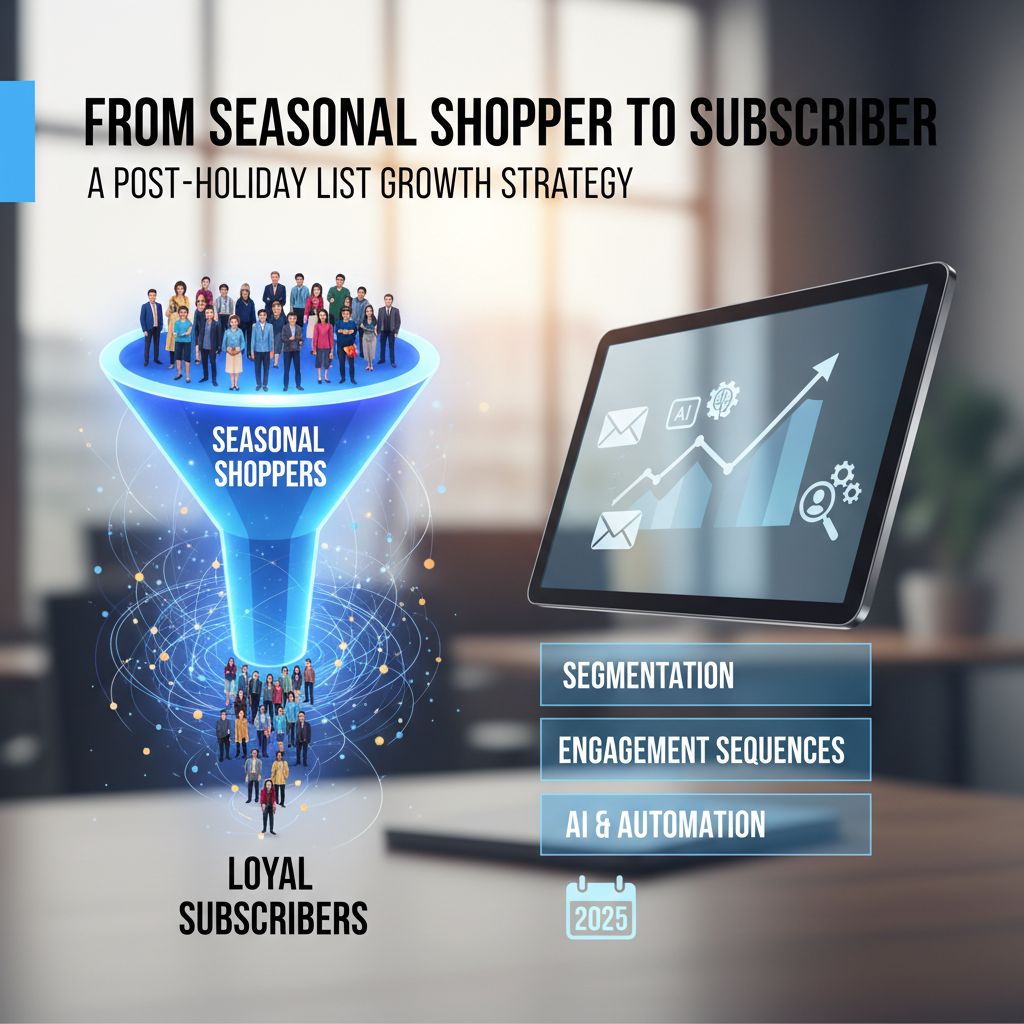
The digital confetti from the Q4 holiday rush has settled, and your revenue reports are looking bright. But as we step into the first quarter of 2025, the most valuable asset you've acquired isn't just the sales data—it's the list of new customers who trusted you with their holiday spending. The challenge? Preventing these seasonal shoppers from becoming one-time transactional ghosts. This is where a robust post-holiday list growth strategy becomes your most critical Q1 initiative, transforming fleeting interest into loyal, year-round brand advocacy.
Key Takeaways
- Shift from Transaction to Relationship: The primary goal is to reframe the customer relationship from a one-time holiday purchase to a long-term, value-based subscription.
- Segmentation is Non-Negotiable: In 2025, generic follow-ups fail. Segment your new holiday shoppers based on purchase behavior (gift-giver vs. self-purchaser, discount-seeker vs. full-price buyer) to deliver hyper-relevant content.
- Value-Driven Content Wins: Move beyond constant sales pitches. Provide exclusive content, tips, community access, and loyalty perks to give new subscribers a compelling reason to stay engaged.
- Leverage AI and Automation: Use modern tools to personalize communication at scale, predict churn, and automate re-engagement campaigns, ensuring no new customer falls through the cracks.
Table of Contents
- Understanding the 2025 Holiday Shopper
- Crafting the Perfect Post-Purchase Welcome
- Hyper-Personalization: Segmentation Strategies
- Leveraging AI for Sustained Engagement
- Building a Community Beyond the Cart
- Measuring What Matters: Post-Holiday KPIs
Understanding the 2025 Holiday Shopper
The customers who flocked to your site between Black Friday and New Year's Eve are not a monolith. They arrived with specific, temporary goals. Some were bargain hunters chasing the best deal. Others were gift-givers on a mission to find the perfect item for someone else. A few might have been treating themselves for the first time. Understanding this intent is the first step in converting them. Before you send a single email, analyze your data to identify these personas. Did they use a first-time buyer coupon? Did they purchase from a "gift guide" category? This initial analysis forms the foundation of your entire retention strategy.
Crafting the Perfect Post-Purchase Welcome
The first few emails a new customer receives after their holiday purchase are critical. This is your opportunity to re-introduce your brand outside the context of a sale. Your goal is to onboard them into your brand's ecosystem. A well-crafted sequence can make all the difference.
The Onboarding Sequence
- Email 1: The Brand Introduction. Go beyond the transactional "Thank you for your order." Share your brand's mission, what you stand for, and introduce the people behind the products. This is your chance to build an emotional connection.
- Email 2: Value & Utility. Help them get the most out of their purchase. This could be a setup guide, a "how-to" video, or a blog post showcasing creative ways to use the product. This positions you as an expert, not just a retailer.
- Email 3: The Gentle Nudge. Introduce them to other product categories or best-sellers that complement their initial purchase. Frame it as a helpful suggestion, not a hard sell. An effective strategy for this is creating detailed post-purchase nurture sequences that guide the customer journey.
Hyper-Personalization: Segmentation Strategies
In 2025, batch-and-blast emails are a guaranteed path to the unsubscribe button. Your holiday cohort must be segmented for effective communication. By leveraging data, you can create distinct communication tracks that resonate with each group.
- Gift-Givers vs. End-Users: Send gift-givers a follow-up asking if their recipient enjoyed the gift, along with suggestions for what they might like for themselves. For end-users, focus on product education and cross-selling.
- High-Value vs. Discount-Driven: For customers who paid full price, focus on loyalty programs, early access to new products, and premium content. For those who only bought on deep discount, re-engage them with targeted offers or entry-level products to encourage a second purchase.
- First-Time vs. Repeat Holiday Buyers: Acknowledge and reward loyalty. Thank repeat buyers for their continued support and offer them an exclusive perk. For first-timers, focus on building trust and showcasing the full value of your brand. Implementing powerful CRM personalization is the key to managing these distinct segments effectively.
Leveraging AI for Sustained Engagement
Artificial intelligence is no longer a futuristic concept; it's a core component of a modern marketing stack. For post-holiday retention, AI can be a game-changer. AI-powered tools can analyze customer behavior to predict who is most likely to make a repeat purchase and who is at risk of churning. This allows you to proactively send targeted re-engagement campaigns or special offers to at-risk segments before they go cold. Furthermore, AI can dynamically populate emails with product recommendations based on browsing history and past purchases, ensuring every communication is maximally relevant. This level of automation is central to modern AI-Powered Lead Generation and retention.
Building a Community Beyond the Cart
The most resilient brands of 2025 are those that have built a community, not just a customer list. Encourage your new holiday shoppers to become part of this community.
- Showcase Social Proof: Encourage new customers to share their experiences on social media using a specific hashtag. Feature this user-generated content in your emails and on your website to build trust and a sense of belonging. Running dedicated UGC Holiday Campaigns 2025 can provide a treasure trove of content to use in Q1.
- Offer Exclusive Access: Create a subscriber-only Facebook group, Discord server, or early access portal. Use this channel to share behind-the-scenes content, run polls, and offer perks not available to the general public.
- Launch a Loyalty Program: A well-structured loyalty program gives customers a tangible reason to make their second and third purchase with you instead of a competitor.
Measuring What Matters: Post-Holiday KPIs
To know if your strategy is working, you need to track the right metrics. Move beyond vanity metrics like open rates and focus on KPIs that directly reflect customer loyalty and lifetime value.
- Repeat Purchase Rate: What percentage of your holiday cohort made a second purchase within 30, 60, or 90 days?
- Subscriber Churn Rate: How many of the new sign-ups unsubscribed in Q1? A high churn rate indicates a disconnect between their expectations and your content.
- Customer Lifetime Value (CLV): Track the CLV of the holiday segment over time. A successful strategy will show a steady increase.
- Engagement Score: Look beyond opens to clicks, forwards, and replies. This indicates how much your content is truly resonating.
Frequently Asked Questions (FAQ)
How soon should I contact holiday shoppers after their purchase?
Your post-purchase sequence should begin immediately after the order confirmation. However, the brand-building and non-promotional content should start within the first week, while your brand is still top-of-mind.
Should I immediately offer another discount to get them to buy again?
Avoid this if possible. Leading with another discount devalues your brand and trains customers to wait for sales. Focus on providing value first. If you do offer a discount, make it a modest "thank you" or a reward for joining your loyalty program.
What if a large number of holiday shoppers unsubscribe?
Some churn is inevitable, as many are purely seasonal buyers. However, a high unsubscribe rate (over 2-3%) in your first few emails suggests a problem with your messaging, segmentation, or the value you're offering. Analyze the data to see which segments are leaving.
How is a post-holiday nurture sequence different from a standard welcome series?
It's more nuanced. It acknowledges the context of their holiday purchase, often addressing gift-giving, and its primary goal is retention and brand education rather than immediate conversion, which is often the focus of a standard welcome series for a non-seasonal lead.
Can I use SMS in this strategy?
Absolutely. For customers who opted into SMS, it can be a powerful channel for high-priority messages like shipping updates, flash sales for subscribers, or quick polls. Just be mindful of frequency and ensure messages provide clear value.
What is the biggest mistake brands make post-holiday?
The biggest mistake is silence. Many brands focus all their energy on the Q4 rush and then go quiet in January, letting their newly acquired list go cold. Consistent, value-driven communication is key to maintaining momentum.
Conclusion
The end of the holiday season isn't the end of the customer journey; it's the beginning. By implementing a thoughtful, data-driven strategy, you can successfully execute the transition from seasonal shopper to subscriber. The key in 2025 is to prioritize relationship-building over immediate sales. Through strategic segmentation, value-packed content, and intelligent automation, you can transform that Q4 influx of customers into a thriving, engaged community that will drive revenue and growth all year long.
Ready to Turn Your Holiday Traffic into Year-Round Revenue?
Don't let your hard-earned holiday customer list go cold. Our team specializes in creating automated, personalized nurture sequences that build lasting customer relationships. Let's discuss how we can build a post-holiday strategy that keeps your new customers engaged and buying throughout 2025. Contact us today for a free strategy session.
Sources & References
The Art Of Customer Retention: Strategies For Long-Term Success - Forbes
11 Customer Retention Strategies to Keep Your Customers Coming Back - HubSpot