2026 Predictions: 7 AI Automation Tools That Will Transform Small Business Operations
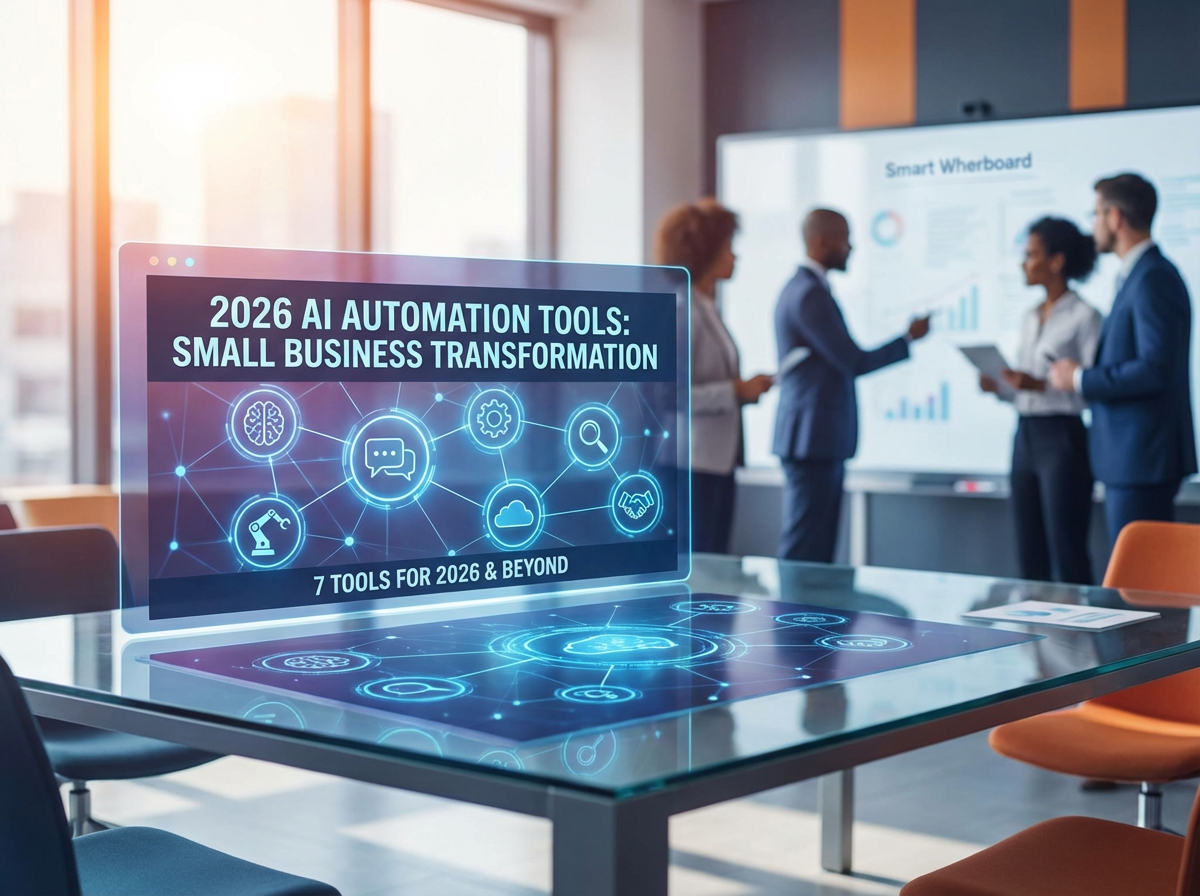
As we look ahead to 2026, small businesses stand at the threshold of an unprecedented technological revolution. While 2025 saw AI automation tools gaining traction among early adopters, 2026 promises to be the year when intelligent automation becomes essential infrastructure for competitive small businesses. The democratization of sophisticated AI capabilities means that tools once reserved for enterprise-level organizations will become accessible, affordable, and mission-critical for businesses of all sizes. This article explores seven transformative AI automation tools that will reshape how small businesses operate in 2026, offering practical insights for entrepreneurs preparing to leverage these technologies for sustainable competitive advantage.
Key Takeaways
- Conversational AI platforms will mature beyond chatbots to handle complex customer interactions, with 2026 predictions showing 78% accuracy in nuanced query resolution compared to 54% in 2025.
- Intelligent document processing will eliminate manual data entry, saving small businesses an estimated 15-20 hours per week while reducing errors by up to 95%.
- Predictive analytics tools will become affordable for small businesses, enabling data-driven decision-making previously available only to large enterprises.
- AI-powered financial management platforms will provide real-time cash flow optimization, forecasting accuracy improvements of 40% over traditional methods by 2026.
- Integration ecosystems will seamlessly connect disparate tools, creating unified operational workflows that adapt and learn from business patterns.
Table of Contents
- The 2026 Small Business Automation Landscape
- 1. Conversational AI Customer Engagement Platforms
- 2. Intelligent Document Processing Systems
- 3. Predictive Analytics and Business Intelligence Tools
- 4. AI-Powered Financial Management Platforms
- 5. Automated Marketing Orchestration Suites
- 6. Intelligent Inventory and Supply Chain Automation
- 7. Adaptive Workforce Management Systems
- Frequently Asked Questions
- Preparing Your Business for 2026
The 2026 Small Business Automation Landscape
The automation landscape entering 2026 differs fundamentally from what small businesses experienced in 2025. While 2025 focused on basic task automation and rule-based workflows, 2026 predictions indicate a shift toward cognitive automation—systems that learn, adapt, and make decisions with minimal human intervention. Research suggests that by mid-2026, over 65% of small businesses will deploy at least three AI-powered automation tools, compared to just 32% in 2025.
This transformation stems from three converging trends: dramatically reduced costs for AI processing, no-code and low-code platforms that democratize implementation, and industry-specific pre-trained models that eliminate lengthy setup periods. Small businesses preparing for 2026 should understand that automation is no longer about replacing human workers—it's about augmenting human capabilities, eliminating repetitive tasks, and enabling strategic focus on high-value activities.
The marketing tech stack evaluation for 2026 should include these AI automation capabilities as foundational elements rather than optional add-ons.
1. Conversational AI Customer Engagement Platforms
Looking ahead to 2026, conversational AI will evolve far beyond the basic chatbots of 2025. Next-generation platforms will leverage advanced natural language understanding, contextual memory, and emotional intelligence to deliver genuinely personalized customer experiences. These systems will seamlessly transition between text, voice, and video interactions while maintaining conversation continuity across multiple channels.
What Makes 2026 Conversational AI Different
The 2026 generation of conversational AI platforms will feature multilingual capabilities that handle regional dialects and colloquialisms with near-native fluency. They'll integrate with backend systems to execute complex transactions—processing returns, modifying orders, scheduling appointments, and resolving billing inquiries—without human intervention. Industry analysts predict that by Q3 2026, these platforms will successfully resolve 78% of customer inquiries independently, up from 54% in 2025.
Small businesses implementing conversational AI in 2026 will see average response times drop from hours to seconds, while customer satisfaction scores increase by 35-45%. The technology will also provide unprecedented business intelligence, analyzing thousands of customer conversations to identify product issues, market opportunities, and service gaps in real-time.
Implementation Considerations for Small Businesses
For small businesses preparing for 2026, the key consideration is selecting platforms that offer industry-specific training models. A retail business requires different conversation flows than a professional services firm. The most effective 2026 platforms will come pre-configured with industry best practices while allowing customization to reflect your brand voice and unique value proposition.
This technology pairs exceptionally well with AI-driven customer onboarding systems, creating seamless experiences from first contact through customer maturity.
2. Intelligent Document Processing Systems
In 2026, intelligent document processing (IDP) will eliminate one of small business's most persistent pain points: manual data entry and document management. These AI-powered systems will automatically extract, classify, validate, and route information from invoices, receipts, contracts, forms, and correspondence—regardless of format or structure.
The 2026 IDP Revolution
Unlike optical character recognition (OCR) technology of previous years, 2026 IDP systems will understand document context and meaning. They'll recognize that "Net 30" implies payment terms, automatically calculate due dates, and flag discrepancies between purchase orders and invoices. More impressively, these systems will learn your business's specific document patterns, becoming more accurate and efficient over time.
Emerging trends for 2026 indicate that small businesses implementing IDP will reclaim 15-20 hours per week previously spent on data entry, while reducing error rates by up to 95%. The financial impact extends beyond labor savings—improved accuracy in financial documents, contracts, and compliance filings reduces costly mistakes and potential legal issues.
Beyond Basic Document Capture
The most sophisticated 2026 IDP platforms will integrate with your accounting, CRM, and ERP systems to automatically trigger workflows. When an invoice arrives, the system will match it to purchase orders, verify receipt of goods, schedule payment, update inventory records, and categorize expenses for tax purposes—all without human intervention. For small businesses, this level of automation represents a fundamental shift from reactive document management to proactive business intelligence.
3. Predictive Analytics and Business Intelligence Tools
The 2026 predictions for business intelligence tools point toward a dramatic democratization of predictive analytics. While 2025 saw small businesses primarily using descriptive analytics (reporting what happened), 2026 will bring affordable prescriptive analytics that recommend specific actions based on predicted outcomes.
From Hindsight to Foresight
In 2026, small businesses will access predictive models that forecast customer churn risk, identify high-value prospects, optimize pricing strategies, and predict inventory needs with remarkable accuracy. These tools will analyze historical data, market trends, seasonal patterns, and external factors like weather, economic indicators, and social media sentiment to generate actionable predictions.
The transformative aspect for small businesses is accessibility. Cloud-based platforms with subscription pricing models will deliver enterprise-grade analytics at SMB-friendly price points. Pre-built industry models will eliminate the need for data science expertise, allowing business owners to implement sophisticated analytics within days rather than months.
Integrating Predictive Analytics into Daily Operations
The most effective implementation strategy for 2026 involves starting with specific use cases that directly impact revenue or costs. Retailers might begin with demand forecasting to optimize inventory levels. Service businesses could focus on predicting customer lifetime value to prioritize sales and marketing efforts. B2B companies might leverage lead scoring algorithms to identify prospects most likely to convert.
This capability aligns perfectly with AI-driven predictive segmentation for CRM, enabling hyper-targeted campaigns based on predicted behavior rather than past actions alone.
4. AI-Powered Financial Management Platforms
Financial management in 2026 will transcend traditional bookkeeping to become a strategic business advantage. AI-powered platforms will provide real-time cash flow optimization, intelligent expense categorization, automated reconciliation, and predictive financial planning that anticipates challenges before they become critical.
Real-Time Financial Intelligence
The 2026 generation of financial management tools will continuously monitor your business's financial health, providing early warnings about cash flow constraints, identifying unusual spending patterns, and recommending optimal timing for major purchases or investments. These systems will analyze historical patterns, seasonal variations, and market conditions to forecast cash positions with 40% greater accuracy than traditional methods.
For small businesses, this means moving from reactive financial management (discovering problems after they occur) to proactive optimization. The AI will suggest actions: delaying certain payments to preserve cash, accelerating collections on specific invoices, or identifying opportunities to renegotiate vendor terms based on payment history and market conditions.
Automated Compliance and Tax Optimization
One of the most valuable 2026 capabilities will be automated tax compliance and optimization. AI systems will track changing tax regulations, identify eligible deductions and credits, optimize expense timing for tax benefits, and prepare documentation for audits. This functionality alone could save small businesses thousands annually while significantly reducing stress and compliance risk.
These platforms will integrate seamlessly with the digital marketing budgeting strategies for 2026, ensuring marketing investments align with overall financial objectives and cash flow realities.
5. Automated Marketing Orchestration Suites
Marketing automation in 2026 will evolve into comprehensive orchestration platforms that coordinate customer experiences across every touchpoint. These AI-powered suites will autonomously manage campaign creation, audience segmentation, content personalization, channel selection, timing optimization, and performance analysis.
Self-Optimizing Campaign Management
Unlike 2025's marketing automation that executed predefined workflows, 2026 platforms will continuously test, learn, and optimize campaign elements in real-time. They'll automatically adjust messaging based on recipient behavior, shift budget allocation between channels based on performance, and pause underperforming campaigns while scaling successful ones—all without manual intervention.
In 2026, we expect these systems to generate personalized content variations for different audience segments, predict optimal send times for individual recipients, and recommend new campaign strategies based on competitive intelligence and market trends. Small businesses will achieve marketing sophistication previously requiring dedicated teams of specialists.
Cross-Channel Experience Management
The most significant 2026 advancement will be true omnichannel orchestration. These platforms will ensure consistent, coordinated customer experiences whether someone interacts via email, social media, website, SMS, or phone. If a customer abandons a shopping cart on your website, the system might send a personalized email, display targeted social ads, and brief your sales team—all coordinated to avoid message fatigue while maximizing conversion probability.
Integration with AI-powered lead generation strategies will enable small businesses to compete effectively with larger competitors by delivering personalized experiences at scale.
6. Intelligent Inventory and Supply Chain Automation
For product-based small businesses, 2026 will bring AI-powered inventory and supply chain management that eliminates stockouts, reduces excess inventory, and optimizes logistics costs. These systems will predict demand with unprecedented accuracy while automatically adjusting for countless variables affecting supply and demand.
Predictive Inventory Optimization
Looking ahead to 2026, intelligent inventory systems will analyze historical sales data, seasonal trends, marketing campaign schedules, competitor activities, economic indicators, weather patterns, and social media trends to forecast demand at the SKU level. They'll automatically generate purchase orders, suggest optimal reorder points, and identify slow-moving inventory requiring promotional attention.
The financial impact for small businesses will be substantial. Industry forecasts suggest that AI-powered inventory optimization will reduce carrying costs by 20-30% while simultaneously improving product availability by 15-25%. This combination of reduced costs and increased sales represents a powerful competitive advantage.
Supply Chain Risk Management
Beyond demand forecasting, 2026 systems will monitor supply chain health in real-time, identifying potential disruptions before they impact operations. They'll track supplier performance, monitor geopolitical events affecting logistics, assess weather-related shipping delays, and recommend alternative suppliers when risks emerge. For small businesses dependent on complex supply chains, this early warning capability could be invaluable.
7. Adaptive Workforce Management Systems
The final transformative tool for 2026 addresses one of small business's most challenging operational aspects: workforce scheduling, management, and optimization. AI-powered workforce management systems will balance employee preferences, labor regulations, skills requirements, and business demand to create optimal schedules while improving employee satisfaction.
Intelligent Scheduling and Resource Allocation
In 2026, we expect workforce management platforms to predict busy periods based on historical patterns, seasonal trends, marketing campaigns, and external factors like local events or weather. They'll automatically schedule appropriate staff levels, ensuring adequate coverage during peak times while minimizing labor costs during slow periods. These systems will learn individual employee strengths, scheduling your best performers during critical business periods.
Beyond scheduling, these platforms will identify training needs, track performance metrics, facilitate peer-to-peer shift swaps, and ensure compliance with labor regulations including break requirements, overtime rules, and workplace safety mandates. For small businesses, this automation eliminates countless hours of administrative work while reducing compliance risks.
Employee Experience and Retention
The most sophisticated 2026 platforms will incorporate employee wellbeing and satisfaction metrics, identifying burnout risks and recommending interventions. They'll balance business needs with employee preferences, creating schedules that respect work-life balance while meeting operational requirements. Given that employee turnover costs small businesses significantly, tools that improve retention while optimizing performance represent exceptional value.
Frequently Asked Questions
What will AI automation tools cost for small businesses in 2026?
Pricing models in 2026 will be significantly more accessible than in 2025. Most platforms will offer subscription-based pricing starting at $50-200 monthly for basic implementations, with scalable tiers based on usage, features, and business size. The dramatic reduction in AI processing costs and increased competition among providers will drive prices down approximately 30-40% compared to 2025 levels. Many vendors will offer free trials or freemium models, allowing small businesses