Post-mortem Meetings That Don't Suck: A Template for Reviewing Q4 & Holiday Campaigns
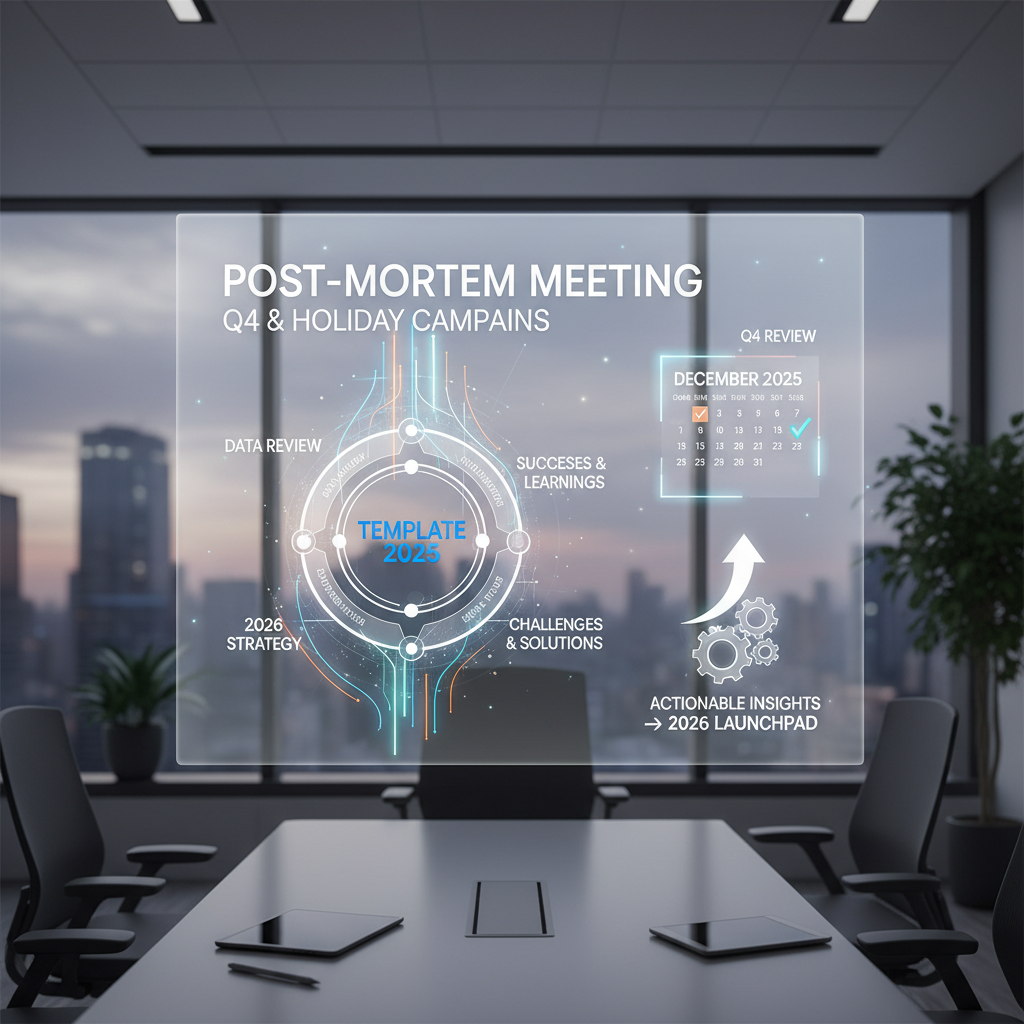
The confetti has settled, the last of the holiday return labels have been printed, and your team is finally catching its breath after a whirlwind Q4. The 2025 holiday season was a marathon of AI-driven personalization, immersive AR shopping experiences, and relentless competition on platforms like TikTok Shop. Now comes the part many teams dread: the post-mortem. But what if this meeting wasn't a soul-crushing review of everything that went wrong? What if, instead, it was the most valuable strategic session of the year? It's time to transform this process from a painful autopsy into an energizing launchpad for 2026. This is your guide to running Post-mortem Meetings That Don't Suck: A Template for Reviewing Q4 & Holiday Campaigns that will fuel your success for the year ahead.
Key Takeaways
- Preparation is Paramount: A successful post-mortem begins long before the meeting. Circulate a blameless agenda, gather comprehensive data, and use pre-meeting surveys to collect candid feedback.
- Structure for Success: Follow a clear four-part template: The Big Picture, a Deep Dive on Wins, an honest look at What Didn't Work, and clear, Actionable Next Steps with assigned owners.
- Foster Psychological Safety: The goal is learning, not blaming. A skilled facilitator should establish ground rules that encourage open discussion about challenges and unexpected outcomes without fear of reprisal.
- Focus on Action, Not Just Analysis: The ultimate value of a post-mortem is its impact on future strategy. Every insight should be translated into a concrete action item for your 2026 plans, from budget allocation to content creation.
Table of Contents
- Why Your Q4 Post-Mortem Is More Than Just a Recap
- The Pre-Mortem: Setting the Stage for Success
- The Ultimate 2025 Post-Mortem Meeting Template
- Fostering a Culture of Psychological Safety
- Turning Insights into Action for 2026
- Frequently Asked Questions (FAQ)
Why Your Q4 Post-Mortem Is More Than Just a Recap
In the fast-paced marketing landscape of 2025, resting on your laurels—or dwelling on your missteps—is a recipe for obsolescence. The Q4 and holiday season is your most data-rich period of the year. It’s a compressed timeline where you test new channels, creatives, and offers on a massive, highly motivated audience. A well-executed post-mortem doesn't just rehash the numbers; it uncovers the "why" behind them. It’s the critical bridge between your 2025 performance and your 2026 strategy, providing the raw data and qualitative insights needed for smarter planning, innovation, and growth.
The Pre-Mortem: Setting the Stage for Success
The success of your meeting is determined before anyone even joins the video call. Proper preparation ensures the conversation is focused, data-driven, and productive. Don't skip these crucial steps.
Gather Your Data (The Right Way)
Move beyond surface-level metrics. In 2025, a comprehensive data pull should include:
- Performance Metrics: GA4 data on conversions, revenue, ROAS, and user paths. Compare against forecasts and previous years.
- Channel-Specific Data: Deep dives into Meta's Advantage+ campaigns, TikTok Shop performance, Google PMax results, and email/SMS engagement rates.
- Customer Data: Insights from your CRM on new vs. returning customer revenue, Lifetime Value (LTV) of holiday cohorts, and segment performance.
- Qualitative Insights: Use social listening tools (like Brandwatch or Sprinklr) to analyze customer sentiment around your campaigns. What were the comments on your influencer posts? How was the unboxing experience shared on social media?
Circulate a Pre-Meeting Survey
An anonymous survey sent out 2-3 days before the meeting is a powerful tool. It allows team members to provide candid feedback without the pressure of a group setting. Ask simple, open-ended questions:
- What do you consider our single biggest success of Q4?
- What was our biggest challenge or unexpected obstacle?
- If you had a magic wand, what one thing would you change about our holiday campaign process?
- Which tool or process helped you the most? Which one hindered you?
Set a Clear, Blameless Agenda
Email the agenda at least 24 hours in advance. Frame it constructively. Instead of "What Went Wrong?", use "Opportunities for Improvement." This small shift in language sets a collaborative, forward-looking tone. Clearly state the meeting's goal: "To identify key learnings from our 2025 holiday campaigns to build a stronger, more effective plan for 2026."
The Ultimate 2025 Post-Mortem Meeting Template
Structure is your best friend for keeping the meeting on track and ensuring all critical areas are covered. Allocate a designated facilitator to keep time and guide the conversation. We recommend a 90-minute meeting.
Part 1: The Big Picture (15 mins)
Start high-level to ground everyone in the overall outcomes. Briefly review the original campaign goals (OKRs) and present the top-line results versus the forecast. Use clear visuals. Conclude this section by highlighting the single biggest, data-supported win and the single most significant challenge identified in the pre-meeting surveys.
Part 2: Deep Dive - What Worked? (30 mins)
This is the time to celebrate and understand success. Focus on replicating what was effective.
- Channels & Platforms: Did our investment in immersive AR filters on Instagram drive more sales than our TikTok creator partnerships? How did our programmatic ads perform in the cookieless environment?
- Campaigns & Creative: Which ad creative had the highest click-through and conversion rates? Did our UGC holiday campaigns build trust and drive sales? How did the AI-generated video assets perform against the human-shot creative?
- Offers & Messaging: Did the "Buy More, Save More" tier work better than a flat discount? Did our messaging around sustainable packaging resonate, and did we see that reflected in social sentiment?
Part 3: Deep Dive - What Didn't Work? (30 mins)
Frame this section around "unexpected outcomes" and "learning opportunities." The facilitator's role is crucial here to prevent finger-pointing.
- Budget & Pacing: Where did we see wasted spend? Did we allocate enough budget to top-performing campaigns early enough?
- Audience & Segments: Which customer segments failed to engage? Was our personalization strategy for returning customers effective, or did it fall flat?
- Process & Technology: Did our site speed hold up under Black Friday traffic? Were there any breakdowns in communication between the marketing, creative, and web development teams?
Part 4: Actionable Insights & Next Steps (15 mins)
This is the most critical part of the meeting. Turn discussion into documentation and action. Use a simple "Start, Stop, Continue" framework.
- Start: What new ideas or tactics should we try in 2026 based on our discussion? (e.g., "Start investing in a dedicated budget for TikTok Shop influencer collaborations.")
- Stop: What processes or campaigns were ineffective and should be discontinued? (e.g., "Stop running generic 15% off promotions and focus on tiered offers.")
- Continue: What worked well that we should double down on? (e.g., "Continue using AI tools for initial ad creative variations.")
For every action item, assign a clear owner and a deadline. These insights are the foundation for your Q1 planning and will heavily influence your digital marketing budget for 2026.
Fostering a Culture of Psychological Safety
The single biggest killer of a useful post-mortem is fear. If team members are afraid to admit mistakes or point out flaws in a strategy championed by a senior leader, you will never get to the root of your challenges. The meeting facilitator must actively create a safe space by setting ground rules, such as "Assume positive intent" and "Critique ideas, not people." When someone shares a challenge, thank them for their candor. Celebrating the learning that comes from failure is key to building a resilient, innovative team.
Turning Insights into Action for 2026
The post-mortem document should not be filed away to collect digital dust. It is a living blueprint for the year ahead. Immediately use these findings to:
- Update Your Marketing Playbooks: Document what you've learned about specific channels, creative approaches, and promotional strategies.
- Inform Your Content Strategy: The data from Q4 is a goldmine. Use it to build out your 2026 content calendar strategy with topics and formats you know will resonate.
- Refine Your Customer Journey: You acquired a flood of new customers. How will you keep them? Use your learnings to optimize your welcome series and develop strategies for automating customer retention in 2026.
- Plan Your Tech Stack: Did your tools serve you well? Identify any gaps or underperforming platforms that need to be addressed in your 2026 budget.
Frequently Asked Questions (FAQ)
Who should attend a post-mortem?
Include core team members directly involved in the campaign's strategy and execution—representatives from marketing, creative, web development, sales, and customer service. Keep the group small enough (ideally 8-10 people) to ensure everyone can contribute.
How long should a post-mortem meeting be?
For a major Q4 review, 90 minutes is ideal. This allows enough time for deep dives without leading to fatigue. A clear agenda and a strong facilitator are key to staying on schedule.
What's the difference between a post-mortem and a debrief?
While often used interchangeably, a debrief is typically a more straightforward reporting of what happened. A post-mortem is a deeper, more diagnostic process focused on root cause analysis and generating actionable improvements for the future.
How do you handle a post-mortem when the campaign was a total failure?
This is when a blameless culture is most critical. Frame the entire meeting around learning. The goal isn't to assign blame but to understand precisely why the campaign failed so the team never repeats those mistakes. Focus on process, strategy, and external factors, not individual performance.
What's the best tool for running a remote post-mortem?
In 2025, collaborative whiteboarding tools are essential for remote or hybrid teams. Platforms like Miro, FigJam, and Mural are excellent for real-time brainstorming, note-taking, and organizing ideas within the "Start, Stop, Continue" framework.
How soon after the campaign should we hold the meeting?
Hold the meeting within 1-2 weeks of the campaign's conclusion. This ensures the details are still fresh in everyone's mind, but you've had enough time to gather and analyze the final data.
Conclusion
Running post-mortem meetings that don't suck is less about a rigid formula and more about a cultural shift. By prioritizing preparation, fostering psychological safety, and maintaining a relentless focus on actionable outcomes, you can transform this often-dreaded meeting into one of your most powerful strategic tools. The insights gleaned from an honest review of your 2025 holiday campaigns are the building blocks for a more innovative, efficient, and successful 2026.
Build Your 2026 Blueprint
Feeling overwhelmed by the data? Let's help you find the signal in the noise. Our team of expert strategists can help you dissect your Q4 performance and build a data-driven marketing roadmap for 2026 that drives real growth. Contact us today for a free consultation.
Sources & References
How to Run a Postmortem Meeting - Harvard Business Review
Post-Mortem - Atlassian Team Playbook
How to run a post-mortem meeting: a step-by-step guide - Asana