Q1 Kickstart: How to Use November Data to Finalize Your 2026 Content Calendar
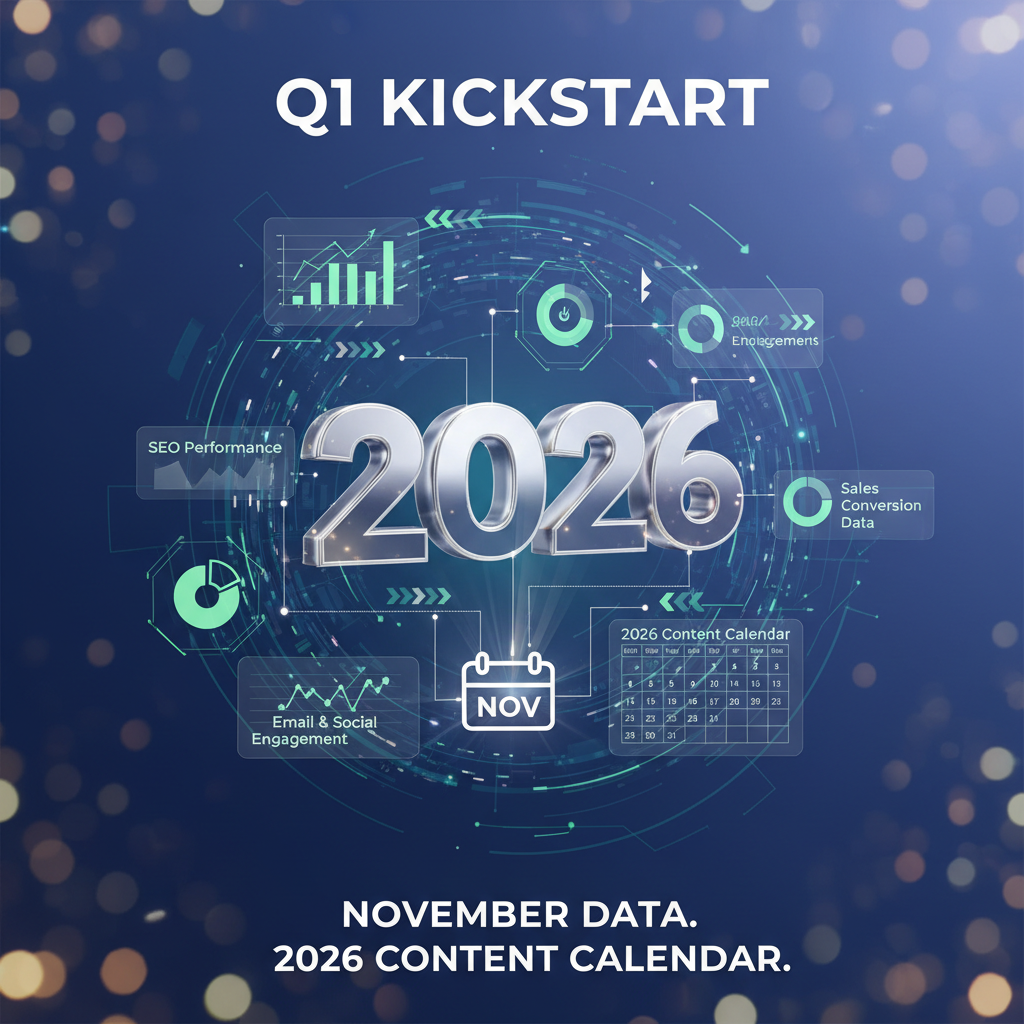
As the end-of-year rush of 2025 builds to a crescendo, it’s tempting to focus solely on closing out Q4 with a bang. But the smartest marketers are already looking ahead, using real-time data to architect a winning start to 2026. While December is often a chaotic mix of holiday promotions and last-minute shopping, November provides a clearer, more strategic dataset. This is your goldmine—a month filled with high-intent customer behavior that serves as the perfect crystal ball for Q1. This guide will show you exactly how to perform your Q1 Kickstart: How to Use November Data to Finalize Your 2026 Content Calendar and get a critical head start on the competition.
Key Takeaways
- November is a strategic predictor: Unlike the chaotic holiday gift-buying of December, November data (including BFCM) reveals high-intent purchasing behavior and early 2026 research trends.
- Focus on three core data sets: Analyze your website/SEO performance, email/social engagement, and sales/conversion data from November to get a holistic view of what resonates with your audience.
- Translate insights into action: Use your findings to identify content gaps, create content pillars for Q1, and align your topics with the post-holiday consumer mindset of "fresh starts" and self-improvement.
- Audit your technology now: Ensure your analytics and marketing tools are properly configured to capture clean data and are prepared for the strategic shifts you'll make in the new year.
Table of Contents
- Why November Data is Your Q1 Crystal Ball
- The Key November Metrics to Analyze
- Translating Insights into Your 2026 Content Calendar
- Tools and Tech for Data-Driven Planning
Why November Data is Your Q1 Crystal Ball
While the entire fourth quarter is critical, November holds a unique strategic value. The period includes major shopping events like Black Friday and Cyber Monday, where customers are actively researching and making considered purchases—not just for gifts, but for themselves. This behavior is a powerful indicator of their priorities and pain points, which often carry directly into their New Year's resolutions and Q1 purchasing decisions.
December data, in contrast, can be skewed. It’s often dominated by last-minute gift-giving, which might not reflect your ideal customer's core needs. A person buying a product as a gift has a different motivation and journey than your end-user. November, therefore, gives you a cleaner signal of genuine market demand and the messaging that drives action. By analyzing this data in early December 2025, you can finalize a Q1 2026 content plan that is proactive, not reactive.
The Key November Metrics to Analyze
To build a robust plan, you need to look beyond surface-level numbers. Dive deep into these three areas to extract actionable intelligence.
Website and SEO Performance
Your website is a direct reflection of user intent. In Google Analytics 4 and Google Search Console, look for:
- Top-Performing Pages: Which blog posts, landing pages, and product pages saw the most traffic and engagement? These topics are clearly resonating and should be expanded upon in Q1.
- Search Queries: What terms did users search to find you? Look for informational queries ("how to...", "best way to...") and early-stage transactional queries. Are people already searching for "2026 fitness plans" or "small business tax software 2026"? These are your Q1 content seeds.
- User Behavior Flow: Where did users go after landing on your popular November content? Understanding this path helps you build a more effective lead nurturing series for Q1.
Email and Social Media Engagement
Your direct communication channels are a testing ground for messaging. Analyze your November campaigns to see what truly connected with your audience. Did your Thanksgiving Client Appreciation email have a higher open rate than your BFCM promotion? That's a powerful insight.
Look at click-through rates on specific calls-to-action, social media share counts, and comment sentiment. This data tells you not only what topics your audience cares about, but how they prefer to discuss them.
Sales and Conversion Data
Ultimately, content must drive business results. Your November sales data is a treasure trove of information about what offers and solutions are most compelling.
- Top-Selling Products/Services: What were your bestsellers? Plan Q1 content around these proven winners, such as case studies, advanced user guides, or "how to get more value from X" articles.
- Offer Performance: Did a "bundle and save" offer outperform a simple percentage discount? This informs the structure of your Q1 promotions.
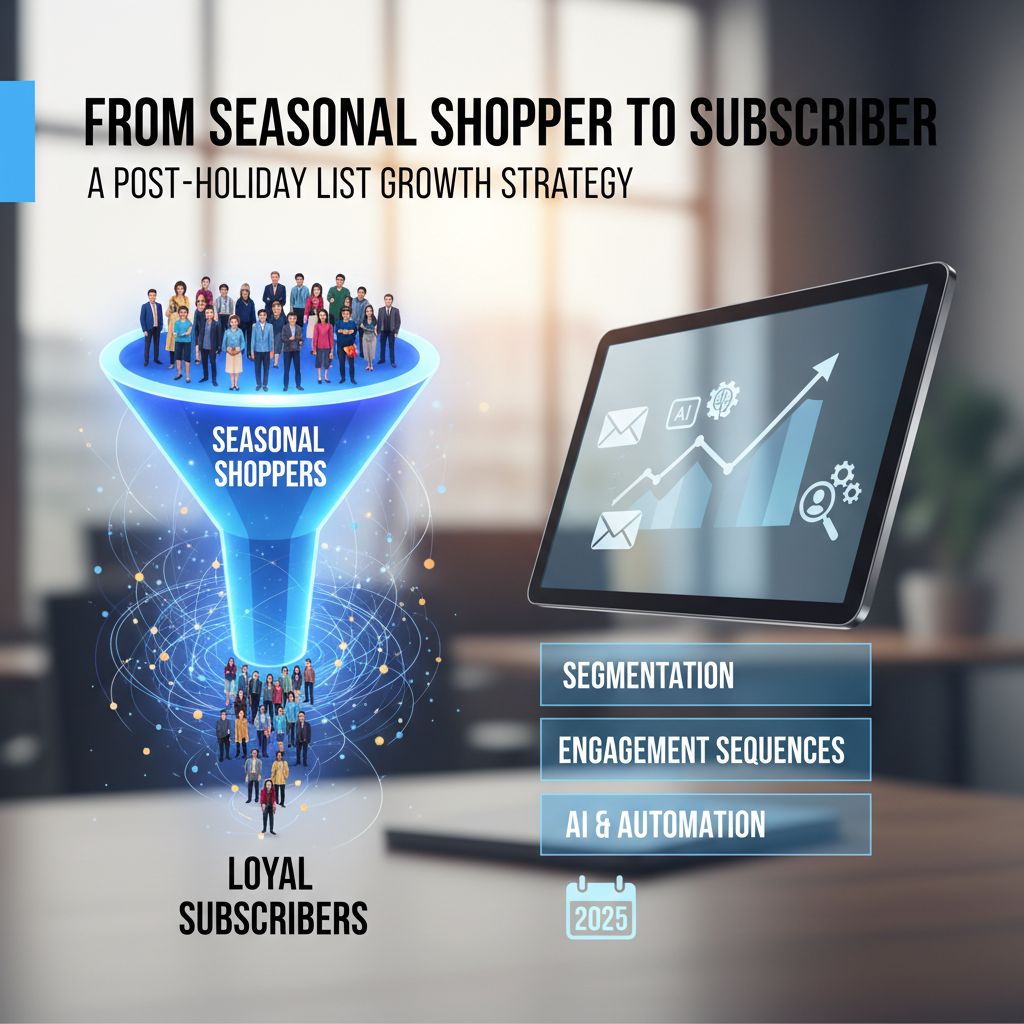
- Customer Segments: Which customer segments were most active? New customers or returning clients? Use this to tailor Q1 content, perhaps focusing on a strong Post-Holiday List Growth Strategy to retain new buyers.
Translating Insights into Your 2026 Content Calendar
Data is useless without action. Here’s how to transform your November analysis into a concrete Q1 content plan.
1. Identify Content Gaps and Pillars
Based on your analysis, where are the gaps? If you saw a spike in searches for "AI-powered budget tools" but have no content on the topic, that's a major Q1 opportunity. Group your findings into 3-5 core content pillars—these are the high-level themes you will own in Q1. For example, a B2B SaaS company's pillars might be "Productivity Automation," "Team Collaboration," and "2026 Financial Planning."
2. Map Content to the Post-Holiday Mindset
January is a time of renewal, resolutions, and planning. Your content should reflect this. Frame your products and services as solutions that help customers achieve their new year goals.
- B2C Example: A fitness brand can use November data on popular workout gear to create a "New Year, New You Challenge" content series in Q1.
- B2B Example: A marketing agency can use November data on high-converting lead magnets to launch a Q1 webinar titled "Finalize Your 2026 Marketing Budget with Confidence."
3. Plan a Multi-Channel Approach
Don't just plan blog posts. A top-performing topic from November should be repurposed across multiple channels in Q1. A successful blog post can become a video script, an infographic for social media, a series of emails, and a topic for a live Q&A session. This maximizes the value of your insights and reaches your audience on their preferred platforms.
Tools and Tech for Data-Driven Planning
Effective analysis requires the right tools. Before diving deep into planning, ensure your stack is ready. Your core toolkit should include:
- Analytics: Google Analytics 4, Adobe Analytics
- SEO: Google Search Console, Ahrefs, Semrush
- CRM and Marketing Automation: HubSpot, GoHighLevel, Marketo
- Social Media Analytics: Native platform insights, Sprout Social
This is also the perfect time to perform a marketing tech stack 2026 audit to ensure your tools can support your ambitious new year goals.
Frequently Asked Questions (FAQ)
Why shouldn't I use December data for Q1 planning?
December data is often skewed by last-minute holiday gift shopping, which may not reflect your core customer's true needs or intent. November data, including BFCM, provides a cleaner look at considered purchases and genuine interest.
How far in advance should I finalize my Q1 content calendar?
Ideally, you should aim to have your Q1 calendar finalized by mid-December. This gives your team enough time to start research, writing, and production before the holiday break, allowing you to hit the ground running in January.
What if my business isn't seasonal or impacted by holidays?
Even for non-seasonal businesses, November is a period of high online activity and budget finalization for the upcoming year. The data still reveals what topics are gaining traction and what problems your audience is trying to solve heading into 2026.
How can AI help with this planning process?
AI tools can accelerate your analysis by identifying trends in large datasets, suggesting content topics based on search queries, and helping you draft initial outlines for blog posts, social media updates, and email campaigns.
What is the single most important metric to track from November?
While it varies by business, "conversion rate on key offers" is often the most telling. It's a direct measure of how well your messaging and value proposition are resonating, providing a clear signal for what to double down on in Q1.
How often should I review my content plan once Q1 starts?
Review your plan monthly. A content calendar should be a living document. Check your performance against your goals each month and be prepared to pivot or re-prioritize based on what's working in the current market.
Conclusion
Getting a fast start in Q1 is no longer about guesswork; it's about strategic, data-driven foresight. By treating your November 2025 performance data as a roadmap, you can move beyond reactive marketing and build a content calendar for 2026 that is aligned with your audience's proven interests and needs. Analyzing website traffic, campaign engagement, and conversion metrics will uncover the themes, topics, and formats that will drive success. Stop guessing what your audience wants in the new year and start using the data they’re already giving you to build a plan that guarantees a powerful Q1 kickstart.
Ready to Turn Insights into Revenue?
A data-driven content plan is the first step. The next is having the automation and lead management systems in place to convert that engagement into sales. Discover how our platform can help you build and execute a high-performance marketing strategy for 2026. Schedule a free demo today!
Sources & References
How to Develop a Content Strategy: A Start-to-Finish Guide - Content Marketing Institute
15 Best Content Calendar Tools to Plan Your Content in 2025 - Semrush
New ways to make Search Console data more actionable - The Keyword (Google)