
From Static to Strategic: Building Interactive Financial Advisor Websites for 2026 Client Engagement
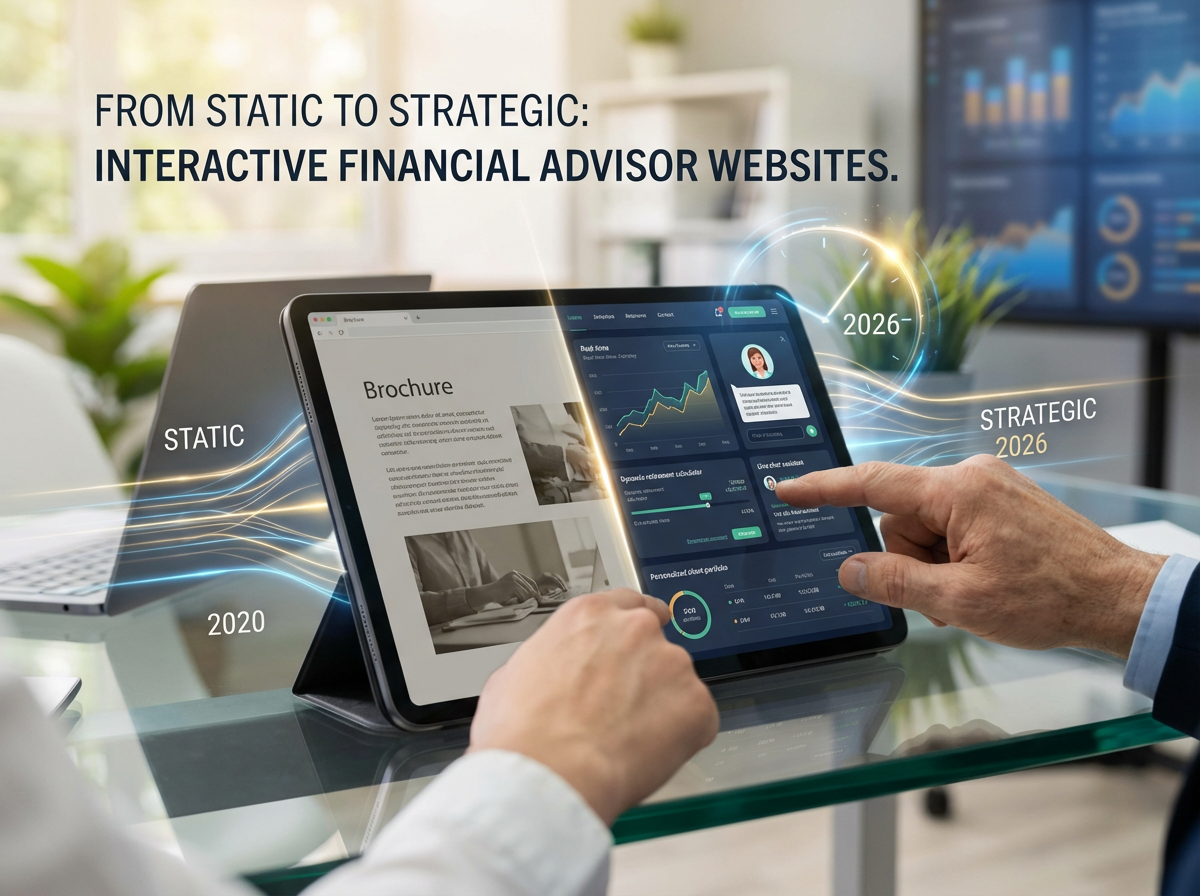
In the digital-first landscape of 2025, the humble financial advisor website can no longer afford to be a static online brochure. For years, it served as a digital business card—a place for a headshot, a list of services, and a contact form. But as we look toward 2026, client expectations have fundamentally shifted. Today's investors, from tech-savvy millennials to digitally-adapted retirees, demand value, personalization, and interaction at every touchpoint. Your website is no longer just a destination; it's the central hub of your client experience, a dynamic tool for education, engagement, and growth. The transition from static to strategic: building interactive financial advisor websites for 2026 client engagement is not just an upgrade—it's an essential evolution for survival and success.
Key Takeaways
- Static is Obsolete: In 2025, a website that only lists services and contact information is a liability. Clients expect dynamic, value-driven digital experiences.
- Interaction Drives Trust: Interactive tools like retirement calculators, risk tolerance quizzes, and secure client portals build credibility and foster deeper client relationships before the first meeting.
- AI-Powered Personalization is the New Standard: Leveraging AI to deliver personalized content, goal tracking, and tailored advice on your website is crucial for attracting and retaining high-value clients in 2026.
- Content is More Than Text: Interactive formats such as live Q&A sessions, on-demand webinars, and data visualizations are far more effective at educating and engaging prospects than traditional blog posts alone.
- Your Website is a Growth Engine: A strategic, interactive website becomes a powerful tool for lead generation, client onboarding, and long-term retention, directly impacting your firm's bottom line.
Table of Contents
- The Demise of the Digital Brochure: Why 2025 Demands More
- Foundational Pillars of the 2026 Interactive Advisor Website
- Harnessing AI for Hyper-Personalized Client Journeys
- Content Reimagined: Interactive Formats That Captivate
- Measuring What Matters: KPIs for a Strategic Website
- Future-Proofing Your Firm: The Essential Tech Stack
The Demise of the Digital Brochure: Why 2025 Demands More
For too long, the financial advisory industry has treated websites as a passive marketing tool. The formula was simple: state your philosophy, list your certifications, and hope for a phone call. This model is fundamentally broken. A 2025 study by Cerulli Associates highlights that over 70% of prospective clients conduct significant online research before ever contacting an advisor. If your website doesn't immediately provide value, answer their pressing questions, and offer a glimpse into the client experience you provide, they will simply click away to a competitor who does.
The modern client journey is non-linear and self-directed. Prospects want to educate themselves on their own terms. They want to understand your approach, test-drive your expertise through valuable content, and feel confident in your capabilities before committing to a conversation. A static website fails this test entirely. It speaks at the visitor, whereas an interactive site engages in a dialogue, turning a passive observer into an active participant.
Foundational Pillars of the 2026 Interactive Advisor Website
Transforming your digital presence requires a strategic shift in thinking. Instead of asking, "What do we want to tell people?" ask, "What do our ideal clients want to do?" Here are the essential interactive components for a forward-thinking 2026 website.
Self-Service Financial Planning Tools
Empower visitors with immediate value. Simple, well-designed calculators and simulators are powerful lead-generation magnets. Consider implementing:
- Retirement Savings Calculators: Allow users to input their age, income, and savings to project their retirement readiness.
- Investment Goal Planners: Help prospects visualize the path to major life goals like buying a home, funding education, or starting a business.
- Risk Tolerance Quizzes: An engaging, short questionnaire that provides a preliminary risk profile can be a fantastic conversation starter and an effective way to segment leads.
Secure and Integrated Client Portals
The client portal should be more than just a place to view statements. It is the digital extension of your office. A best-in-class portal in 2025 offers:
- Real-time Performance Dashboards: Clean, intuitive visualizations of portfolio performance, asset allocation, and progress toward goals.
- Secure Document Vault: A two-way repository for sharing and signing documents, eliminating insecure email attachments.
- Integrated Meeting Scheduler: A seamless connection to your calendar that allows clients to book meetings without back-and-forth emails.
Interactive Educational Resources
Move beyond the standard blog post. Your expertise is your greatest asset, and it should be presented in a way that is both accessible and engaging. This is a core part of effective 2026 financial advisory content. Think about checklists that users can interact with, or data visualizations that update as they input their own information.
Harnessing AI for Hyper-Personalized Client Journeys
Artificial intelligence is no longer a futuristic concept; it's a practical tool for delivering bespoke digital experiences. By integrating AI into your website, you can move from generic messaging to one-to-one communication at scale.
Imagine a prospect visits your site. Based on their browsing behavior—perhaps they spend time on pages about estate planning for business owners—your website's AI can dynamically adjust the content they see. The homepage call-to-action might change from a generic "Schedule a Consultation" to "Download Our Guide to Business Succession Planning." This level of relevance is what sets leading firms apart. This strategy relies heavily on smart data organization, a concept explored in AI-Driven Predictive Segmentation, which shows how to structure your CRM to power these personalized experiences.
Furthermore, AI-powered chatbots have evolved significantly. The 2025 versions can handle complex queries, schedule appointments, and qualify leads 24/7, ensuring you never miss an opportunity while freeing up your team's valuable time.
Content Reimagined: Interactive Formats That Captivate
Your content strategy is the fuel for your interactive website. While foundational blog posts on financial topics are still important for SEO, high-engagement formats are what will drive conversions in 2026.
- On-Demand Webinars: Host live events and then offer the recordings on your website behind a simple registration form. This provides evergreen value and captures leads continuously. Your 2026 Webinar Event Strategy should be a cornerstone of your content plan.
- Interactive Case Studies: Instead of a static PDF, create a web-based case study where users can click through different stages of a client's journey to see how you solved their specific problems.
- Video FAQs: Record short, personable videos answering the most common questions you receive. This builds a human connection and is far more engaging than a wall of text.
Measuring What Matters: KPIs for a Strategic Website
A strategic website requires strategic measurement. Vanity metrics like "page views" are less important than data that reflects genuine engagement and business impact. Key performance indicators (KPIs) to track in 2026 include:
- Tool Engagement Rate: What percentage of visitors use your interactive calculators or quizzes?
- Lead Conversion Rate from Tools: Of those who use a tool, how many submit their information for a follow-up?
- Client Portal Login Frequency: How often are your current clients logging in to engage with their financial plan?
- Content-to-Consultation Rate: Which interactive content pieces (webinars, case studies) are most effective at driving meeting requests?
Future-Proofing Your Firm: The Essential Tech Stack
Building an interactive website isn't a one-person job; it requires a carefully selected suite of technologies working in harmony. Your 2026 tech stack should be agile, integrated, and scalable.
- Modern CRM: The hub of your client data (e.g., Salesforce Financial Services Cloud, Wealthbox).
- Marketing Automation Platform: To nurture leads generated from your website (e.g., HubSpot, ActiveCampaign).
- Financial Planning Software with API Access: To power client portals and calculators (e.g., eMoney Advisor, MoneyGuidePro).
- Website Platform: A flexible CMS that allows for custom integrations (e.g., Webflow, WordPress with a robust development team).
It's crucial to perform a regular marketing tech stack 2026 audit to ensure your tools are not only current but are also seamlessly integrated to provide a cohesive user experience.
Frequently Asked Questions (FAQ)
How much does it cost to build an interactive financial advisor website?
Costs can vary widely based on complexity. In 2025, expect a range from $15,000 for a semi-custom site with basic interactive tools to over $50,000 for a fully custom platform with deep AI and client portal integration. Think of it as an investment in your firm's primary growth engine, not just a marketing expense.
Do I need to be a tech expert to manage an interactive website?
No, but you need a strong technology partner. A good web development agency or marketing firm specializing in financial services will build the site on a user-friendly Content Management System (CMS) and provide the necessary training and support for your team to manage content and review analytics.
Will older clients use these interactive features?
Absolutely. The digital divide has narrowed significantly. A 2025 Pew Research report shows that over 80% of adults aged 50-64 are active internet users who are comfortable with online banking and digital tools. The key is to design with accessibility and user-friendliness in mind, ensuring clear navigation and intuitive interfaces for all age groups.
How long does it take to see a return on investment (ROI)?
You can see leading indicators like increased website traffic and higher lead quality within the first 3-6 months. A tangible ROI, measured in new assets under management directly attributable to the website, typically becomes clear within 12-18 months as new leads are nurtured and converted into clients.
Can I add interactive features to my existing website?
Sometimes. If your current website is built on a modern, flexible platform, you can often phase in new features like calculators or a scheduling tool. However, if your site is more than 3-4 years old, it's often more cost-effective and strategically sound to undertake a full redesign to ensure a cohesive user experience and modern technical foundation.
How important is mobile-friendliness for an advisor site?
It is non-negotiable. In 2025, over 60% of web traffic to financial service sites comes from mobile devices. Your interactive tools, client portal, and content must be perfectly optimized for smartphones and tablets. A poor mobile experience is a primary reason prospects abandon a site.
What is the single most important interactive feature to start with?
If you're just beginning, a high-value, lead-generating tool like a "Retirement Readiness Quiz" or a "Portfolio Fee Analyzer" is an excellent starting point. It provides immediate, tangible value to the visitor in exchange for their contact information, starting the relationship on a positive and helpful note.
Take the Next Step Toward a Strategic Digital Presence
Your website is your most powerful asset for attracting, engaging, and retaining clients in the modern age. A static, outdated site is actively costing you opportunities. It's time to invest in a digital experience that reflects the quality of the advice you provide.
Ready to transform your website from a passive brochure into an active growth engine? Schedule a complimentary digital strategy session with our team today. We'll analyze your current online presence and provide an actionable roadmap for building an interactive website that will captivate clients and drive growth for your firm in 2026 and beyond.
Conclusion
The path from static to strategic: building interactive financial advisor websites for 2026 client engagement is a journey of transformation. It requires a shift in mindset—viewing your website not as a cost center, but as the core of your client acquisition and service model. By embracing interactive tools, AI-driven personalization, and dynamic content, you can create a digital experience that builds trust, demonstrates expertise, and converts discerning prospects into loyal, long-term clients. The firms that make this strategic investment in 2025 will be the ones that define the advisory landscape of tomorrow.
Sources & References
U.S. Advisor Metrics 2025 Report (Hypothetical) - Cerulli Associates
Nerd's Eye View Blog by Michael Kitces - Kitces.com
Research & Practice Management - Financial Planning Association (FPA)