Last-Minute Guide to a 'New Year, New Me' Email Campaign
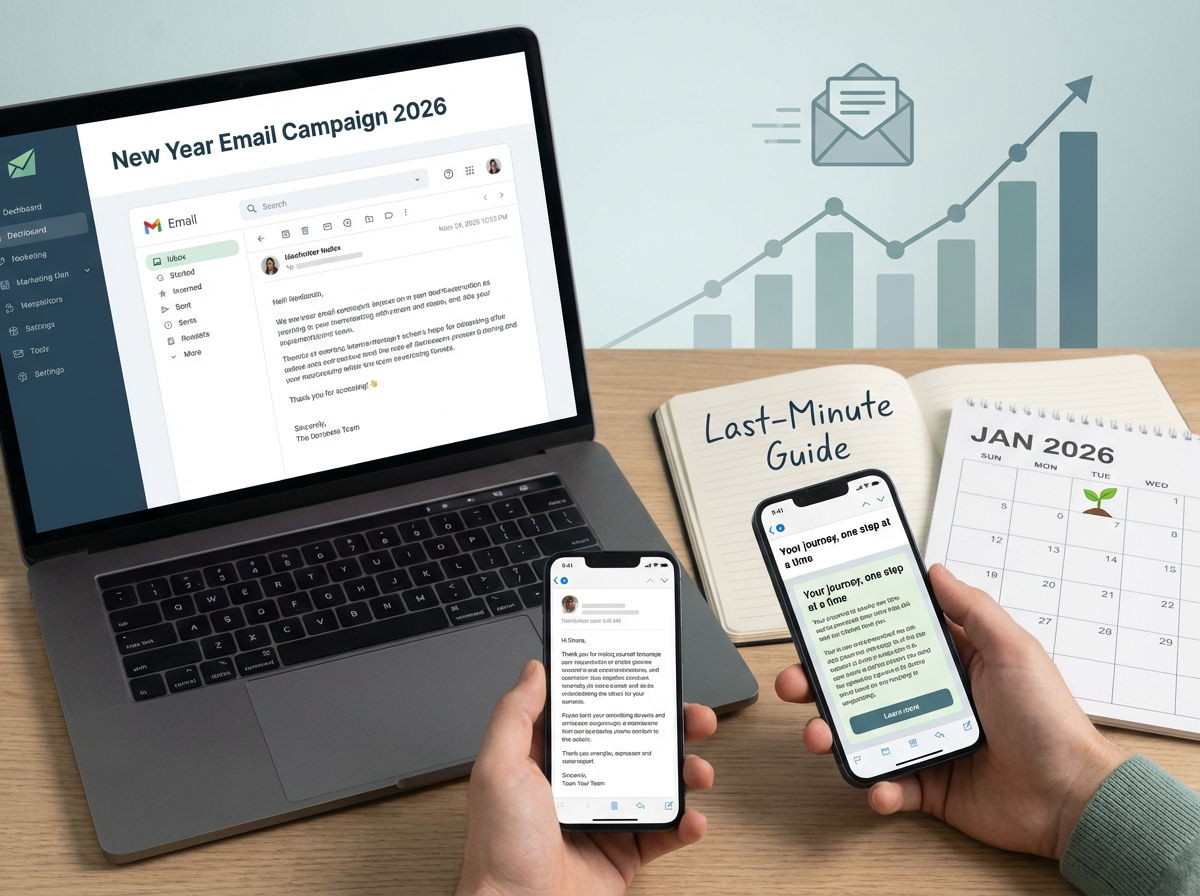
As the confetti from the holiday season settles, a new and powerful marketing opportunity emerges: the "New Year, New Me" phenomenon. While marketers in 2025 saw success with broad themes of self-improvement, the landscape for 2026 is evolving rapidly. Consumers are tired of grand, unattainable resolutions and are instead seeking authentic, community-driven, and hyper-personalized support for creating sustainable habits. Looking ahead to 2026, your last-minute email campaign must be smarter, more empathetic, and technologically advanced to cut through the noise. This guide provides the forward-looking strategies you need to launch a successful last-minute 'New Year, New Me' email campaign that resonates with the 2026 consumer mindset.
Key Takeaways for Your 2026 Campaign
- Hyper-Personalization is the Standard: In 2026, AI will move beyond simple name personalization. The expectation is for emails to reflect an understanding of a user's past behaviors and predict their likely goals, offering tailored solutions.
- Focus on Micro-Resolutions: The "lose 50 pounds" messaging of the past is out. 2026 is about "micro-habits" and small, achievable wins. Frame your products or services as tools for taking the *first step*, not for completing an overwhelming journey.
- Interactive Content Drives Engagement: Static emails are becoming obsolete. We expect a surge in in-email interactive elements like polls, quizzes, and dynamic content that personalizes in real-time. This creates a two-way conversation, not a one-way broadcast.
- Authenticity and Community Triumph: Polished, aspirational content is being replaced by a demand for authenticity. Leverage user-generated content (UGC), real testimonials, and community-building features to show that real people are achieving real, incremental progress.
Table of Contents
- Rethinking the 'New Year, New Me' Mindset for 2026
- Last-Minute Segmentation Strategies for 2026
- Crafting Compelling Email Content for the 2026 Audience
- Structuring Your Last-Minute 2026 Campaign Flow
- Measuring Success and Preparing for Q1 2026
- Frequently Asked Questions (FAQ)
Rethinking the 'New Year, New Me' Mindset for 2026
The core concept of New Year's resolutions is undergoing a significant cultural shift. Analysis of 2025 campaign data showed a high drop-off rate for engagement after the second week of January, a clear sign of "resolution fatigue." For 2026, the focus is less on a complete identity overhaul and more on continuous, gentle improvement. Consumers are prioritizing mental wellness, sustainable lifestyle changes, and skill acquisition over drastic physical transformations.
Your 2026 strategy should reflect this. Instead of promoting a "new you," promote a "supported you" or an "evolving you." Acknowledge that change is a process, not a single event. This empathetic approach will build trust and foster a long-term relationship that extends far beyond January.
Last-Minute Segmentation Strategies for 2026
Even with limited time, smart segmentation is the difference between a campaign that converts and one that gets deleted. In 2026, this means going beyond basic demographics. Technology is making sophisticated targeting more accessible than ever.
Leverage Predictive AI
The most significant trend for 2026 is the democratization of predictive analytics. Even if you're planning at the last minute, your CRM or email platform likely has AI features that can analyze 2025 purchase data to identify customers with a high propensity to engage with goal-oriented content. AI-Driven Predictive Segmentation can quickly surface audiences interested in fitness, education, or organization, allowing you to tailor your message with incredible precision.
Create Quick Behavioral Segments
If you don't have advanced AI, you can still create powerful segments based on recent behavior:
- Holiday Self-Shoppers: Identify customers who purchased items for themselves during the holiday sales. They are primed for self-improvement messaging.
- Category Browsers: Target users who browsed specific resolution-related categories (e.g., planners, workout gear, online courses) in Q4 but didn't purchase. A gentle nudge in January could be the final push they need.
- Recent First-Time Buyers: These new customers are highly engaged. Welcome them into the new year with a campaign that shows how your brand can be a part of their 2026 journey, helping with automating customer retention from day one.
Crafting Compelling Email Content for the 2026 Audience
Your content must align with the new mindset. Generic, pushy messaging will fail. Focus on inspiration, utility, and connection.
Subject Lines that Spark Action, Not Anxiety
In 2025, we saw many subject lines like "Your New Body Awaits!" For 2026, we expect a shift towards more encouraging and less demanding language. Try these approaches:
- Intrigue: "Your 2026 journey starts with one small step."
- Utility: "A 5-minute habit for a better 2026."
- Community: "You're not alone. Let's build better habits together."
The Rise of Interactive and Generative AI Content
Looking ahead to 2026, emails will become more like micro-experiences. Integrate simple interactive elements to boost engagement. A last-minute campaign can easily include a one-click poll ("What's your main focus for 2026: Wellness, Career, or Creativity?") that segments users for future follow-ups. Generative AI tools can also create personalized motivational quotes or suggest a "first step" based on a user's clicked interest, making your content feel uniquely tailored.
Authenticity Through User-Generated Content (UGC)
Ditch the stock photos. Comb through your 2025 social media mentions, reviews, and testimonials for authentic stories of customer success. Featuring a real person who used your product to learn a new skill or organize their life is far more powerful than a polished ad. This approach builds social proof and makes goals feel more attainable for your audience.
Structuring Your Last-Minute 2026 Campaign Flow
You don't need a complex, month-long automation to be effective. A simple, three-part email series can capture the New Year's momentum perfectly.
- Email 1 (Dec 30 - Jan 1): The Spark of Inspiration. This email should be reflective and low-pressure. Acknowledge the end of 2025 and gently introduce the idea of positive change for 2026. Your CTA could be as simple as asking a question to encourage a reply or a click to a blog post about setting realistic goals.
- Email 2 (Jan 2 - Jan 5): The Actionable First Step. This is where you introduce your product or service as a solution. Frame it as the perfect tool for their *first step*. Offer a helpful guide, a curated product bundle for beginners, or a free trial. The CTA must be clear and direct: "Start Your Journey," "Take the First Step," or "Get Your Plan."
- Email 3 (Jan 7 - Jan 10): The Community & Support System. Combat the inevitable drop in motivation by focusing on support. Share testimonials from others, invite subscribers to a dedicated community forum or social media group, or highlight your excellent customer support. The goal is to show you're a partner in their success, not just a vendor.
Measuring Success and Preparing for Q1 2026
For your 2026 campaigns, success metrics must evolve. While open and click-through rates are still important, pay closer attention to deeper engagement signals:
- Interaction Rate: Track how many users engaged with your polls, quizzes, or other interactive elements.
- Segment Performance: Which resolution themes (e.g., wellness, finance, productivity) generated the most clicks and conversions? This data is gold for planning the rest of your Q1 content.
- Post-Campaign Conversion: Did users who engaged with the "New Year" series go on to purchase related products later in January or February?
Use these insights to refine your marketing strategy for the rest of the quarter. A thorough analysis is critical for continuous improvement, so be sure to use a post-mortem meetings template for 2026 to properly review your campaign's performance and set a data-driven course for the months ahead.
Frequently Asked Questions (FAQ)
When is the best time to send "New Year, New Me" emails in 2026?
The ideal window is from December 30th to January 7th. The first wave (Dec 30 - Jan 1) captures the reflective, planning mindset. The second wave (Jan 2 - Jan 7) catches people as they return to their routines and are ready to take action.
How can I make my 2026 campaign feel authentic and not cliché?
Focus on small, achievable steps rather than life-altering transformations. Use real customer stories and user-generated content instead of stock imagery. Your language should be supportive and encouraging, not demanding or shaming.
What if I don't have advanced AI tools for my 2026 campaign?
You can still achieve great results. Use behavioral segments based on 2025 purchase and browsing history. Manually create segments of customers who bought fitness, education, or home organization products in the past year and tailor your message to them.
Should I offer a discount in my New Year campaign?
It can be effective, but it shouldn't be the primary message. For 2026, lead with value, inspiration, and support. A modest discount or offer (e.g., "Start your year with 15% off") can be a great incentive to drive the final conversion, but the focus should be on the goal, not the price.
How long should a "New Year, New Me" campaign last?
A last-minute campaign should be short and impactful. A series of 2-3 emails over the first 10 days of January is perfect. You can then transition successful themes into your broader Q1 content strategy.
What are some examples of "micro-resolutions" to focus on in 2026?
Instead of "get fit," focus on "walk for 15 minutes a day." Instead of "read more books," try "read 5 pages before bed." Instead of "get organized," focus on "declutter one drawer a week." Frame your product as the perfect tool for that small, specific action.
How do I handle subscribers who don't engage with the campaign?
Don't bombard them. If a subscriber doesn't open or click on your New Year series, simply let them fall back into your regular communication cadence. Forcing the theme on an uninterested audience can lead to unsubscribes.
Conclusion: Setting the Tone for a Successful 2026
Executing a powerful last-minute guide to a 'New Year, New Me' email campaign in 2026 is about more than just timing; it's about tuning into the evolving consumer psyche. The key shifts for 2026 are clear: a move from overwhelming resolutions to manageable micro-habits, from generic email blasts to hyper-personalized, AI-driven conversations, and from aspirational marketing to authentic, community-focused support. By embracing these trends, even a quickly assembled campaign can build deep customer loyalty and drive significant revenue, setting a positive and profitable tone for the year ahead.
Your 2026 Success Starts Now
Ready to ensure your marketing technology is prepared for the demands of 2026? Don't let outdated tools hold your campaigns back. A marketing tech stack 2026 check-up can reveal gaps in your automation and personalization capabilities. Schedule a free consultation with our strategy team today to audit your stack and build a roadmap for a more intelligent and impactful new year.
Sources & References
Email Marketing Trends To Watch For - Forbes
Most Popular New Year's Resolutions in the U.S. - Statista