Predicting Post-Holiday Churn: A Data-Driven Approach to Q1 Retention
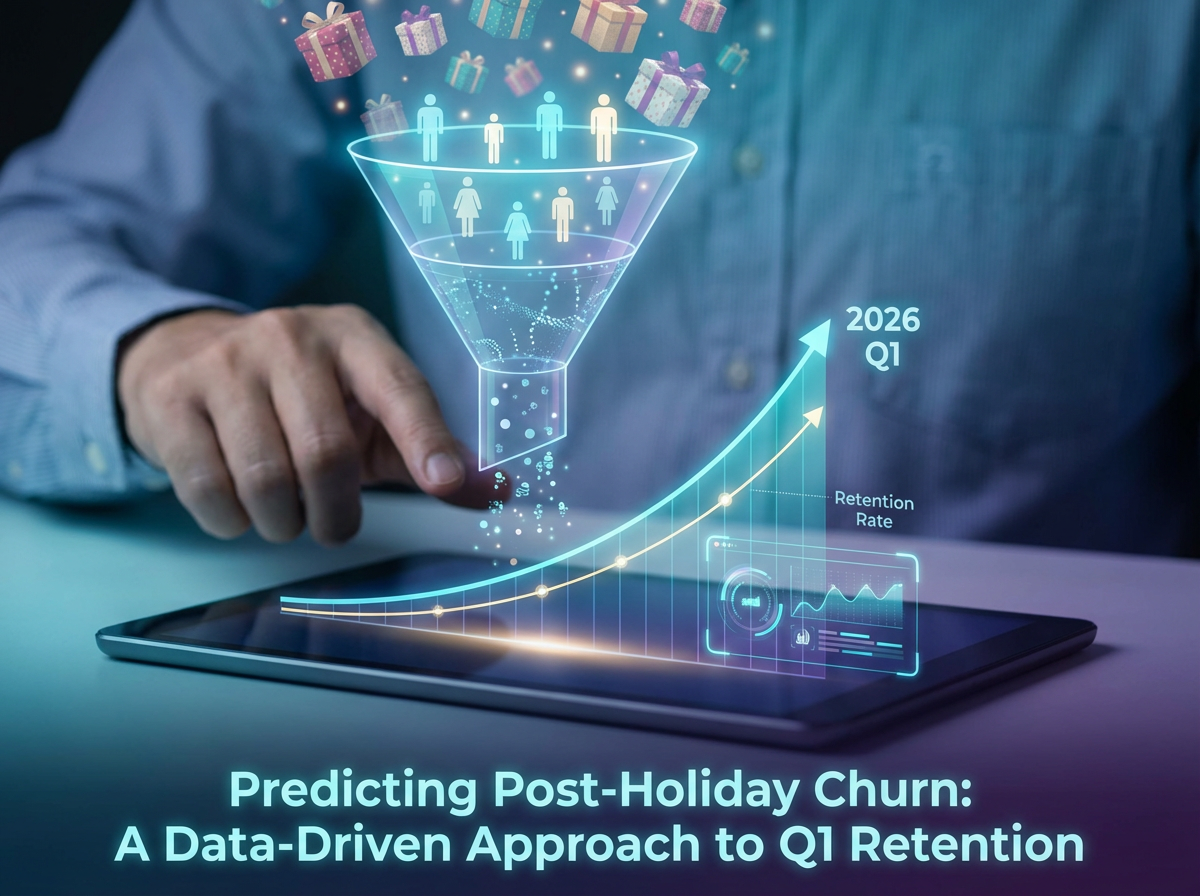
As the dust settles from the record-breaking 2025 holiday shopping season, a new and more complex challenge looms for Q1 2026: retaining the massive influx of new customers. The strategies that worked in previous years—generic "welcome" series and blanket discount offers—are no longer sufficient. Looking ahead to 2026, the battle against post-holiday churn will be won not with broad strokes, but with precision, prediction, and personalization powered by artificial intelligence. This guide provides a forward-looking, data-driven approach to not just manage, but master Q1 retention in the new year, transforming seasonal shoppers into lifelong brand advocates.
Key Takeaways for Q1 2026 Retention
- Predictive AI is Non-Negotiable: In 2026, AI will move from a "nice-to-have" to a core function, proactively identifying at-risk customers and prescribing specific interventions before they churn.
- Zero-Party Data is the New Gold: With the continued deprecation of third-party cookies, success in 2026 hinges on collecting data directly from customers through quizzes, preference centers, and interactive onboarding to fuel genuine personalization.
- Relational Onboarding Replaces Transactional Follow-ups: The focus will shift from simple post-purchase emails to creating immersive onboarding experiences that demonstrate long-term value, build community, and solidify brand loyalty from day one.
- Segmentation Becomes Hyper-Granular: Moving beyond simple "new vs. returning" tags, 2026 demands sophisticated segmentation based on acquisition channel, discount sensitivity, and predicted lifetime value to tailor retention efforts effectively.
Table of Contents
- Reflecting on 2025: The Baseline for Churn
- Emerging Trends for 2026: The New Retention Landscape
- Actionable Strategies for Predicting and Preventing Q1 2026 Churn
- Frequently Asked Questions (FAQ)
- Conclusion: Mastering Retention in 2026
- Ready Your Retention Engine for 2026?
- Sources & References
Reflecting on 2025: The Baseline for Churn
The 2025 holiday season saw consumer spending continue its digital-first trajectory, with many brands reporting their highest-ever volume of first-time buyers. However, historical data from 2025 shows a familiar pattern: a significant drop-off in engagement and repeat purchases by late January. Many businesses found that up to 75% of their holiday shoppers made a single purchase and never returned. This was often the result of outdated retention tactics:
- Over-reliance on deep discounts, which attracted price-sensitive shoppers with low brand loyalty.
- Generic, one-size-fits-all email campaigns that failed to resonate with the specific motivations of different holiday buyer personas.
- A lack of a structured onboarding process, leaving new customers to figure out the brand's value proposition on their own.
Conducting thorough post-mortem meetings template 2026 on your Q4 2025 performance is the essential first step. This 2025 data isn't just a report card; it's the foundational dataset that will train the predictive models and inform the more sophisticated retention strategies required for success in 2026.
Emerging Trends for 2026: The New Retention Landscape
The approach to predicting post-holiday churn and fostering Q1 retention in 2026 will be defined by a deeper integration of technology and a more human-centric understanding of the customer journey. Here are the key trends to prepare for.
Predictive AI Becomes Proactive, Not Just Reactive
In 2026, we expect AI to evolve beyond simply flagging at-risk customers. The next generation of CRM and marketing automation platforms will offer proactive churn prevention. These systems will analyze thousands of data points—purchase frequency, browsing behavior, customer service interactions, and even sentiment from product reviews—to not only predict *who* will churn, but *why* and *when*. This allows for targeted, automated interventions, such as a personalized offer for a complementary product or an invitation to a webinar, triggered days before a customer even considers leaving. Embracing AI-Driven Predictive Segmentation is no longer an option; it's a prerequisite for competitive retention.
The Centrality of Zero-Party Data in Onboarding
The post-cookie internet landscape of 2026 solidifies the importance of zero-party data—information a customer intentionally and proactively shares with a brand. The most successful Q1 retention strategies will be built on this foundation. Expect to see a surge in sophisticated, engaging post-purchase experiences designed to collect this data, such as:
- Interactive style or preference quizzes.
- Gamified preference centers where users can customize their communication frequency and topics.
- Surveys that ask about the gift recipient, helping brands understand if the purchase was for the buyer or someone else.
This data will fuel the highly personalized, value-driven communication that makes a new customer feel seen and understood, dramatically increasing the likelihood of a second purchase.
E-commerce Adopts a SaaS Retention Mentality
Churn is a term born from the Subscription-as-a-Service (SaaS) world, and in 2026, e-commerce and direct-to-consumer (DTC) brands will fully adopt its retention playbook. This means shifting focus from transactional relationships to building long-term, recurring value. Key tactics will include:
- Value-driven content: Sending tutorials, use-case guides, and community stories that help customers get more value from their purchase.
- Community Building: Creating exclusive groups, forums, or channels for customers to connect, share experiences, and feel a sense of belonging.
- Tiered Loyalty Programs: Moving beyond simple points-for-purchase systems to programs that offer experiential rewards, early access, and exclusive status.
Actionable Strategies for Predicting and Preventing Q1 2026 Churn
Understanding the trends is one thing; implementing a strategy is another. Here’s how to prepare your business for Q1 2026.
Step 1: Audit and Enhance Your 2026 Tech Stack
Your ability to execute a modern retention strategy is limited by your tools. Before January 2026, conduct a thorough audit of your technology. Does your CRM have native predictive analytics capabilities? Can your email service provider (ESP) trigger complex, behavior-based journeys? Ensure your marketing tech stack 2026 is equipped to handle the data inputs and automation outputs required for a proactive retention model.
Step 2: Segment Holiday Shoppers with 2026 in Mind
Go deeper than ever before with your segmentation. Using your 2025 holiday data, create nuanced customer segments to tailor your Q1 2026 outreach. Consider segments such as:
- The High-Value Gift Giver: Someone who spent a lot on others. Target them with content about treating themselves or preparing for other gifting occasions (e.g., Valentine's Day).
- The Discount-Driven First-Timer: A customer who only bought a deeply discounted item. Nurture them with value-based content before introducing a modest, strategic offer. Learn how to re-engage sale customers without sacrificing margins.
- The Full-Price Brand Explorer: A first-time buyer who paid full price. This is a high-potential segment. Onboard them with your brand story, founder's mission, and invitations to your loyalty program.
- The Gift Recipient: If you can identify them (e.g., through "gift message" data or post-purchase surveys), create a specific "Welcome to the Brand" journey for them, as they are a brand new lead.
Step 3: Architect Your Q1 Communication Cadence
Map out a 90-day communication plan for your key holiday segments that balances promotion with value. A sample cadence for a "Brand Explorer" might look like this:
- January Week 1: A personalized "Year in Review" email showing how their purchase was part of a larger brand story from 2025.
- January Week 3: An email or SMS with a video tutorial on getting the most out of their new product.
- February Week 2: An invitation to join the brand's exclusive community forum or social media group.
- February Week 4: A curated showcase of new arrivals that align with their initial purchase category.
- March: A special offer or early access tied to the brand's spring collection launch.
Frequently Asked Questions (FAQ)
What is the single biggest mistake companies will make in Q1 2026 retention?
The biggest mistake will be waiting until late January to start. A successful 2026 retention strategy begins the moment a holiday purchase is made. The post-purchase and onboarding experience in December is the first—and most critical—step in preventing a Q1 churn.
How can small businesses afford AI for churn prediction in 2026?
AI-powered features are rapidly becoming democratized. In 2026, many mainstream CRM and email marketing platforms (like HubSpot, Klaviyo, etc.) will offer built-in, user-friendly predictive analytics for churn and lifetime value. The cost is no longer prohibitive and is often included in mid-tier subscription plans.
Is email marketing still the primary channel for retention in 2026?
While email remains a cornerstone, a 2026 omnichannel approach is crucial. Integrating SMS for high-urgency messages, app push notifications for engaged users, and targeted social media ads for re-engagement will create a more comprehensive and effective retention ecosystem.
How do you measure the success of a Q1 retention strategy?
Key metrics for 2026 will include: Repeat Purchase Rate (by cohort), Customer Lifetime Value (LTV) growth from the holiday segment, Churn Rate, and Engagement Score (a composite metric tracking opens, clicks, site visits, etc.). Success is not just preventing churn, but increasing the overall value of the holiday cohort.
What is "zero-party data" and why is it so critical for 2026?
Zero-party data is information that customers willingly and intentionally share with a brand. This includes preferences, purchase intentions, and personal context. It's critical for 2026 because it's a reliable, privacy-compliant way to achieve deep personalization in a world without third-party tracking cookies.
How early should we begin planning our 2026 Q1 retention strategy?
You should begin planning in Q3 of 2025. This gives you time to audit your tech stack, analyze data from the previous year, define your 2026 segments, and build out the automated journeys before the holiday rush even begins.
Conclusion: Mastering Retention in 2026
The transition from 2025 to 2026 marks a pivotal moment for customer retention. The post-holiday period is no longer a time for recovery, but a golden opportunity to forge lasting relationships. By leveraging predictive AI, prioritizing zero-party data, and adopting a value-focused, relational mindset, brands can transform the predictable churn of Q1 into a powerful engine for sustainable growth. The data-driven approach outlined here is not just about keeping customers; it's about understanding them on a deeper level and earning their loyalty long after the holiday decorations have come down.
Ready Your Retention Engine for 2026?
The future of customer loyalty is being built today. Don't let your hard-won holiday customers become a 2026 churn statistic. Contact our team for a complimentary Q1 Retention Strategy Assessment and discover how to build a proactive, data-driven plan that drives growth throughout 2026 and beyond.
Sources & References
The power of personalization in retail - McKinsey & Company
The Future Of Customer Retention Is Proactive And AI-Powered - Forrester
What Is Zero-Party Data and How Can Brands Collect It? - Harvard Business Review