Automating Your Post-Christmas Sales Surge: A Boxing Day Playbook
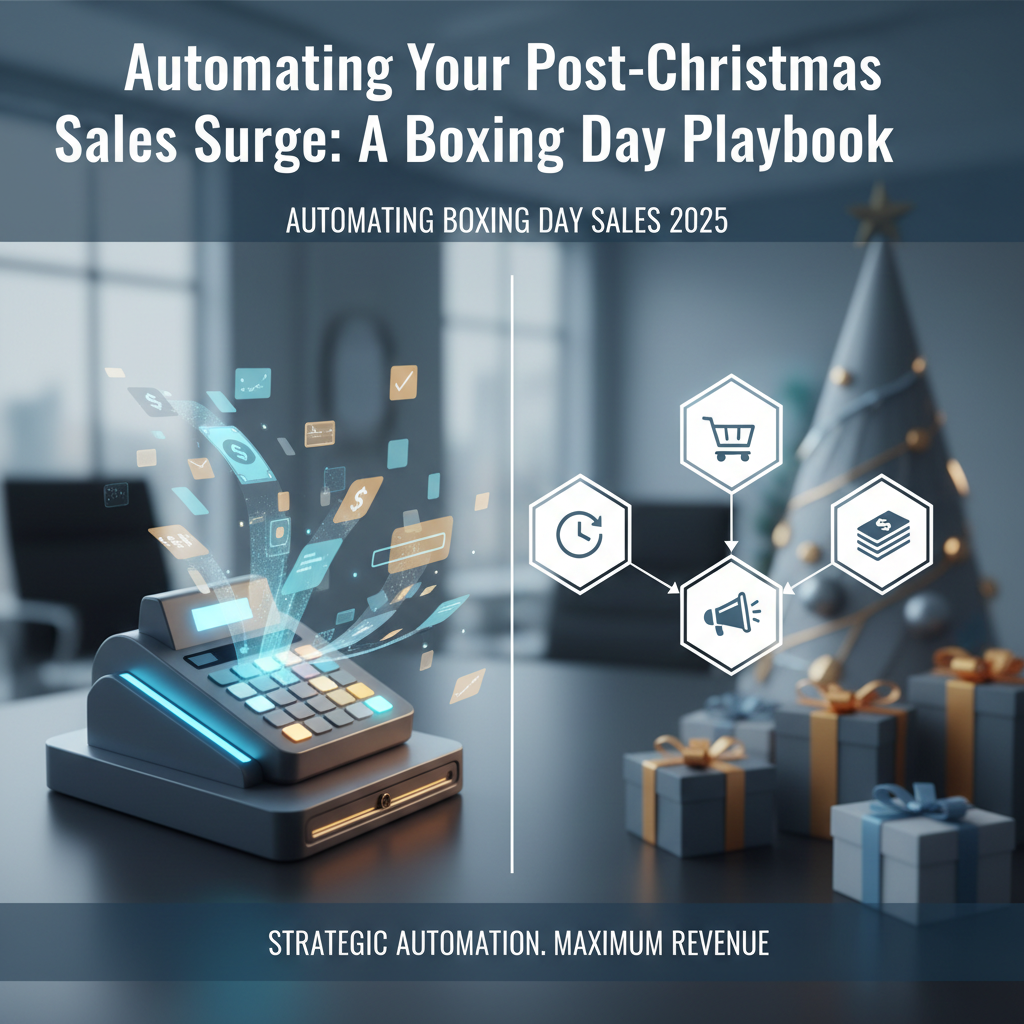
The wrapping paper has been cleared, the festive feast is over, and a quiet calm descends. For many businesses, this signals the end of the hectic holiday rush. But for the savvy marketer in 2025, the game is just beginning. The period between Christmas and New Year's isn't a sales slump; it's a goldmine of opportunity fueled by gift cards, cash gifts, and a consumer mindset ready for self-gifting. This is where smart automation transforms potential into profit, allowing you to capture this second wave of holiday spending without burning out your team. This is Automating Your Post-Christmas Sales Surge: A Boxing Day Playbook, your guide to turning the post-holiday lull into a lucrative launchpad for the year ahead.
Key Takeaways
- Automation is Essential: In 2025, manual campaign management during the post-holiday period is inefficient. Automation allows you to capitalize on the surge in traffic from gift card redemptions and deal-seekers while your team recharges.
- Segmentation is Your Superpower: Don't send a generic "Boxing Day Sale" blast. Segment your audience into new holiday shoppers, loyal VIPs, gift-givers, and abandoned carts to deliver hyper-relevant offers that convert.
- Focus on the Second Sale: The primary goal isn't just to move clearance inventory. It's to convert seasonal, one-time buyers into long-term, loyal customers through strategic post-purchase automation sequences.
- Leverage AI for Predictive Offers: Use AI-powered tools to analyze holiday shopping data and predict what customers will want next. Think automated recommendations for accessories that complement their newly received gifts.
Table of Contents
- The 2025 Post-Holiday Landscape: Why Automation is Non-Negotiable
- Pre-Campaign Prep: Setting the Stage for Automated Success
- The Automation Playbook: Core Workflows for Boxing Day and Beyond
- Measuring Success and Planning for 2026
- Frequently Asked Questions (FAQ)
The 2025 Post-Holiday Landscape: Why Automation is Non-Negotiable
The days following Christmas represent a unique and powerful convergence of consumer behaviors. According to 2025 projections from the National Retail Federation, digital gift card spending is expected to surpass $50 billion this holiday season, with a significant portion of that redemption happening between December 26th and January 1st. Shoppers are actively looking to spend this "found money," and they're also on the hunt for deals to buy the things they really wanted but didn't receive.
This creates a perfect storm of high-intent traffic. However, your team is likely running on fumes after a grueling Q4. This is the core value proposition of automation. It allows you to execute a sophisticated, multi-channel marketing strategy that feels personal and timely to the customer, all while your team enjoys a well-deserved break. Instead of manually launching campaigns on Boxing Day morning, you can have everything scheduled, triggered, and optimized to run seamlessly, capturing sales while you sleep.
Pre-Campaign Prep: Setting the Stage for Automated Success
A successful automated campaign doesn't happen by accident. The work you do in the weeks leading up to Christmas is what sets the stage for a massive post-holiday surge. Treat this prep phase with the same seriousness as your Black Friday planning.
Audience Segmentation: The Foundation of Personalization
Your holiday shoppers are not a monolith. Before you build any workflows, you must segment your audience based on their behavior. A great first step is a thorough Year-End CRM Cleanup to ensure your data is accurate. Key segments for post-Christmas campaigns include:
- New Holiday Buyers: Customers who made their first purchase during the holiday season. The goal is to secure a second purchase and begin building loyalty.
- Gift Givers: Identified by different shipping and billing addresses. Target them with "Treat Yourself" campaigns or thank-you offers.
- VIP Customers: Your loyalists who also shopped during the holidays. Give them exclusive early access or a steeper discount as a reward.
- Holiday Wishlist Creators: Users who added items to their wishlist but didn't purchase. Target them with dynamic ads and emails showing those exact items are now on sale.
- Gift Card Recipients: While harder to track directly, you can create campaigns aimed at "new account" sign-ups post-Christmas, assuming many are activating gift cards.
Inventory & Offer Strategy
Analyze your sales data and current inventory levels. What products are overstocked? What items are popular companions to your best-selling gifts? For example, if you sold a lot of the new flagship smartphone, your automated campaigns should heavily feature cases, wireless chargers, and screen protectors. Use AI-powered inventory management tools to forecast demand and automate dynamic pricing for clearance items, ensuring you maximize margin while clearing out seasonal stock.
Creative Asset Development
Your post-Christmas creative should feel distinct from your pre-holiday messaging. Shift the tone from "the perfect gift for them" to "the perfect treat for you." Prepare all your assets in advance:
- Email Templates: Design separate templates for each audience segment.
- SMS/MMS Copy: Craft concise, compelling messages ready for your automation platform.
- Social Media Ads: Create ad sets targeting your key segments with relevant product imagery and copy.
- On-site Banners: Prepare homepage banners and pop-ups that highlight your Boxing Day or Year-End Sale.
The Automation Playbook: Core Workflows for Boxing Day and Beyond
With your prep work complete, it's time to build the automated workflows that will drive your post-Christmas sales surge. Here are four essential plays for your 2025 playbook.
1. The "Boxing Day Blitz" Timed Campaign
This is your primary sales driver. Schedule a multi-channel sequence to launch early on December 26th. Use your marketing automation platform to schedule emails and SMS messages based on the user's local time zone for maximum impact. The workflow should look something like this:
- Dec 26, 8:00 AM: Initial email and SMS blast announcing the start of the sale.
- Dec 27, 12:00 PM: Follow-up email showcasing best-sellers or category-specific deals to non-openers.
- Dec 28, 6:00 PM: "Sale Ending Soon" SMS to create urgency for those who haven't purchased.
This is a fundamental part of any robust holiday email marketing strategy, extending the value of Q4 well past December 25th.
2. The "New Device, New You" Retargeting Flow
This workflow is triggered by user behavior. Using tracking pixels, identify users who browsed specific product categories that are popular as gifts (e.g., electronics, fitness equipment, kitchen appliances). Your automated ad engine (on platforms like Meta and Google) can then serve them dynamic ads featuring complementary accessories.
Example: A user browsed the "Smartwatch Pro 5" page before Christmas. On Dec 26th, they are automatically entered into an ad audience that sees ads for watch bands, charging stands, and protective cases for that specific model.
3. The "Gift Card Activation" Nudge
Create a simple, automated email flow aimed at encouraging gift card use. The messaging is gentle and helpful, not overly salesy. This can be a general campaign sent to your whole list or triggered by a new account creation post-Christmas.
- Email 1: "Got a Gift Card? Here's What's New!" - Highlights new arrivals and best-sellers.
- Email 2 (3 days later): "Need Inspiration? See How Others Are Using Theirs." - Features user-generated content and top-rated products.
- Email 3 (7 days later): "Don't Let It Expire! Your Perfect Find Awaits." - A final reminder with a gentle nudge.
4. The "Holiday Buyer to Loyal Customer" Nurture Sequence
This is arguably the most important automation. The goal is to convert first-time holiday buyers into year-round fans. This workflow should trigger 7-10 days after their Boxing Day purchase is delivered. For a deep dive on this topic, explore our guide to Automating Customer Retention 2025.
- Step 1: Request a Review. Ask for feedback on their purchase to build engagement and gather social proof.
- Step 2: Introduce Your Brand. Share your brand story, your values, or what makes you different.
- Step 3: Offer a Non-Discount Incentive. Invite them to join your loyalty program, follow you on social media for exclusive content, or sign up for a newsletter that provides value beyond just sales.
Measuring Success and Planning for 2026
Your work isn't done when the sale ends. Meticulous tracking is what separates a one-off success from a repeatable strategy. Key metrics to monitor for your post-Christmas campaigns include:
- Conversion Rate by Segment: Did new buyers convert at a higher rate than VIPs? This informs future offer strategies.
- Average Order Value (AOV): Were your automated cross-sells and upsells effective?
- Customer Acquisition Cost (CAC): How much did it cost to acquire a new customer during this period?
- Lifetime Value (LTV) of the Holiday Cohort: Track the spending of customers acquired between Dec 26-31 over the next 6-12 months. This is the ultimate measure of your retention efforts.
Once you have this data, schedule a review with your team. A structured debrief using a post-mortem meetings template for 2026 will ensure you capture all learnings to make next year's campaign even more successful.
Frequently Asked Questions (FAQ)
When should we start planning our Boxing Day automation?
Ideally, you should begin planning in late October or early November. This gives you ample time for segmentation, creative development, and building and testing your workflows before the main holiday rush consumes your team's attention.
What are the most important tools for this kind of automation?
A robust Customer Relationship Management (CRM) platform is essential for segmentation. You'll also need a marketing automation platform that supports email, SMS, and integrates with your e-commerce site (e.g., Klaviyo, HubSpot, Omnisend). Finally, an ad platform like Meta or Google Ads is crucial for dynamic retargeting.
How do we handle the inevitable increase in returns and customer service inquiries?
Use automation here, too! Set up an automated chatbot on your site to handle common questions about return policies and order status. Create an automated email flow that confirms receipt of a returned item and notifies the customer once their refund has been processed. This frees up your human agents for more complex issues.
Should our Boxing Day sale be our biggest discount of the year?
Not necessarily. While the discounts should be compelling, they don't have to surpass your Black Friday offers. The urgency is driven by the timing and the influx of gift cards. Focus on smart, segmented offers rather than a blanket deep discount that erodes margins.
How can a small business with a limited budget implement these strategies?
Focus on the highest-impact automations first. A simple "Holiday Buyer to Loyal Customer" email nurture sequence and a basic scheduled Boxing Day email campaign can be set up in most modern e-commerce platforms at a low cost. Start there, and as you generate revenue, you can reinvest in more advanced tools for retargeting and SMS.
Conclusion
The post-Christmas sales period is a critical, often-underestimated opportunity to drive significant revenue and foster long-term customer loyalty. By moving beyond manual campaign launches and embracing a strategic, automated approach, you can capitalize on this unique consumer moment. Automating Your Post-Christmas Sales Surge: A Boxing Day Playbook isn't just about making a few extra sales; it's about working smarter, not harder. It's about using technology to meet your customers where they are, with the right message at the right time, all while giving your team the space to recharge and prepare for a successful year ahead.
Ready to Build Your 2026 Marketing Engine?
The insights you gain from your post-holiday automation are the building blocks for a more profitable new year. If you're ready to turn this year's data into next year's strategy, it's time for a tech stack check-up. Are your tools truly ready for the challenges and opportunities of 2026? Read our guide, Tech Stack Check-up: Are Your Marketing Tools Ready for the 2026 Landscape?, to ensure your foundation is solid.
Sources & References
Holiday and Seasonal Trends - National Retail Federation
The Ultimate Guide to Marketing Automation for Ecommerce - Shopify
How to Drive Post-Holiday Sales: 10 Strategies and Examples - Klaviyo